A Walk in London

My daily walk looks like this:
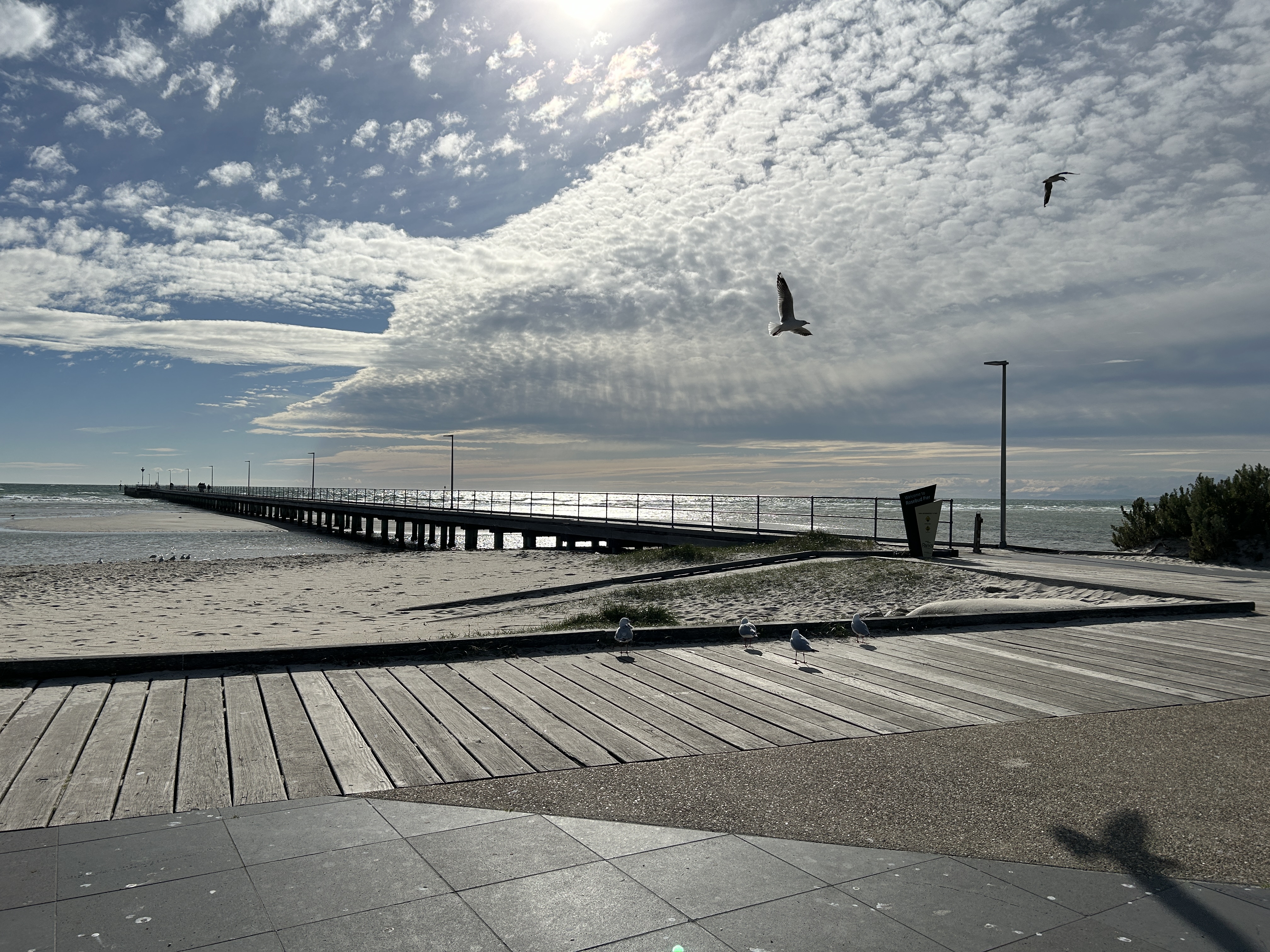
Rosebud Pier, Mornington Peninsula, Victoria, Australia, Winter 2024

My virtual walk took me to the other side of the world, to London. We had visited London in 2008 and visited the well-known tourist spots such as Buckingham Palace, Trafalgar Square, the Tate Modern, Tower Bridge, and other places.

Mick and Sues in London 2008

So today I aim to wander, virtually, in another part of the city. I begin at Old Street Station north of the city.

Southwards down City Road I come to Bunhill Fields which is an old burial site. Therein lie the graves of William Blake who wrote Robinson Crusoe and died in 1827. Also, Daniel Defoe who wrote Pilgrim’s Progress and he died in 1731. It no longer serves as a cemetery and is now a public green space, and home to grey squirrels.

Cutting through the pathway of Bunhill Fields I head north to the City Road Basin in order to pick up the canals. The paths beside the canals are popular and wide and once were the pathways for horses that drew the barges along the canals ferrying goods to and from London. Joolz points out the evidence of this in his entertaining trip along the canals that he has published on his YouTube channel.

Nowadays many barges line the canals as living quarters and a lifestyle choice. No permanent mooring is allowed, so every two weeks the barges must move to another spot – a never-ending game of musical moorings.

I continue to follow the Grand Union Canal enjoying the city sights all the way to Camden Market. Here I spend hours looking at the diverse variety of goods for sale. I buy some local fare for lunch.

I hop on the tube at Camden Town and make the short trip to Kings Cross Station. Here I take in all the activity of the Coal Drops Yard, before admiring the stunning architecture of the new structure sitting alongside the old building. The new structure is over ten years old now and this informative video explains design and building process of the architecture.

Locating the site for the fictional Platform 9 ¾ I pass by the long queue of Harry Potter fans. What is there to see after all, but a brick wall with a sign on it?

Outside I walk next door to St Pancras Station This heritage building has been preserved, the highlight being the huge metal arches that form the structure for the station. I watch the interesting presentation with Tim Dunn speaking with Josie Murray about the history and architecture of the building.

Next along Euston Road I visit the British Library, a must for any authentic Librarian of course. By comparison, the modern brutalist external façade pales beside its railway neighbours.  It is a relatively new red brick building opened in 1998 and houses many collections of National importance. Beyond the open courtyard, the multilevel interior space is light inviting exploration and browsing. Of course, most of their collected items are stored in a robot-controlled warehouse in another part of England. If you want one of these items you need to give 48 hours’ notice, then you can read it in one of the Reading Rooms of the British Library.

Ancient texts and rare illustrations are on display, providing insight into how some of these precious ideas were created.

Further south I visit the British Museum that once housed the library collections. We had visited this place back in 2008.
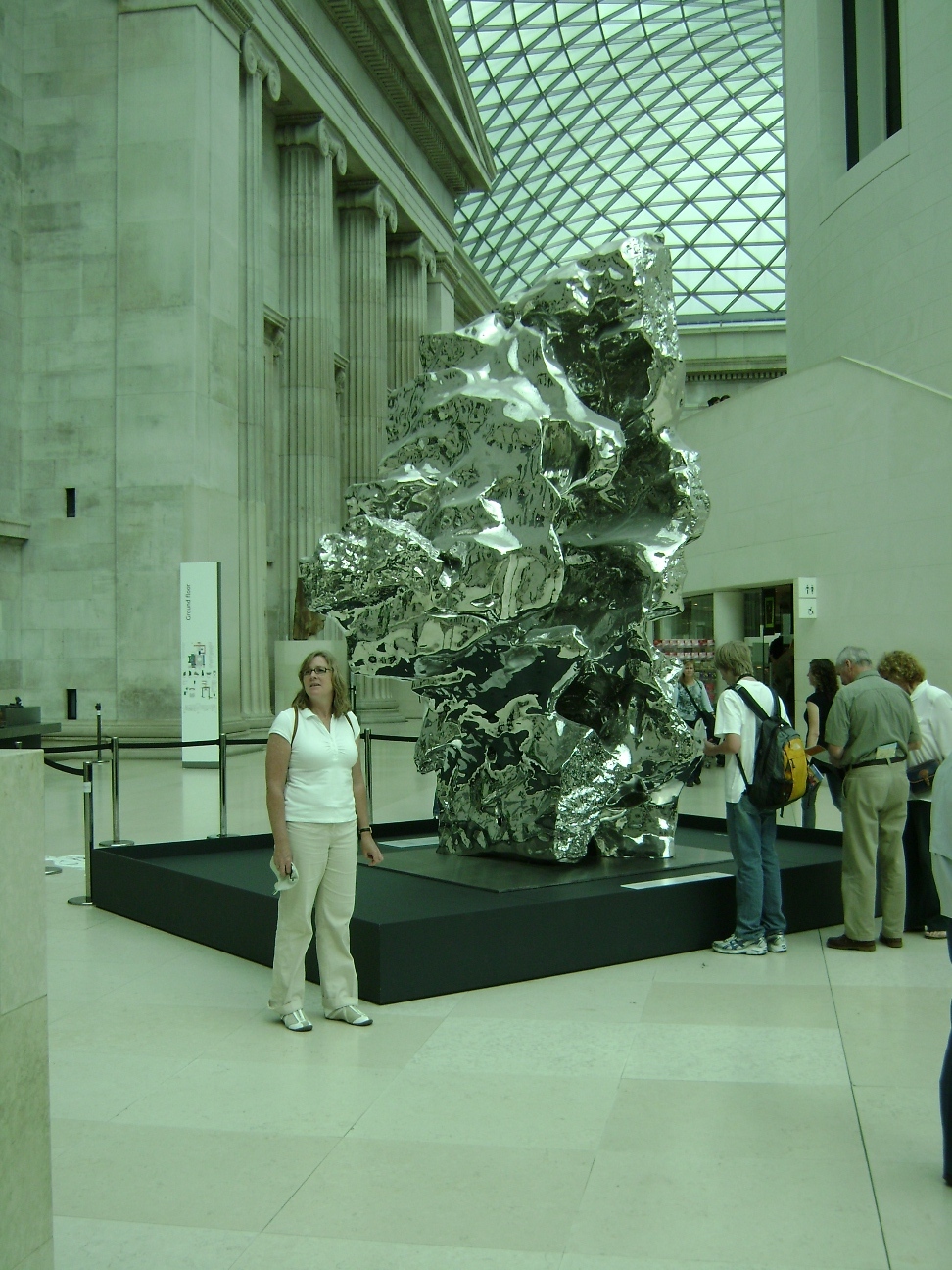
Me at the British Museum, London 2008

This museum opened in 1759 welcoming visitors from around the world. “The Museum is driven by an insatiable curiosity for the world”, and the collections and displays support our vast human history.

Inside the Great Court of the museum is light filled atrium that surrounds a central circular domed Reading Room that was built from 1854 – 1857. Unfortunately, this room is now closed to the public.

Exploring some of the many galleries, the Egyptian history exhibition never disappoints. A virtual tour provided by Google Arts & Culture takes me back to my visit in 2008 and is a fantastic experience for the Armchair Traveller.

Screenshot of the Egyptian Collection at the British Museum from Google Arts & Culture experience

With a head full, stimulated by visual and mental images and information I complete this virtual wander through part of London. In researching this virtual wander, I enjoyed being taken along with Joolz and A Lady in London. Hopefully this virtual walk will become a reality soon.
Visiting Le Louvre

I visited the Musée Du Louvre today. It didn’t cost me $35.72 Australian Dollars entry fee because I did a virtual tour from my home in Australia. (Although perhaps the same amount in Internet access?)

Back in 2008 I did visit in person and loved the fleeting visit that was provided by the Trafalgar Tour.

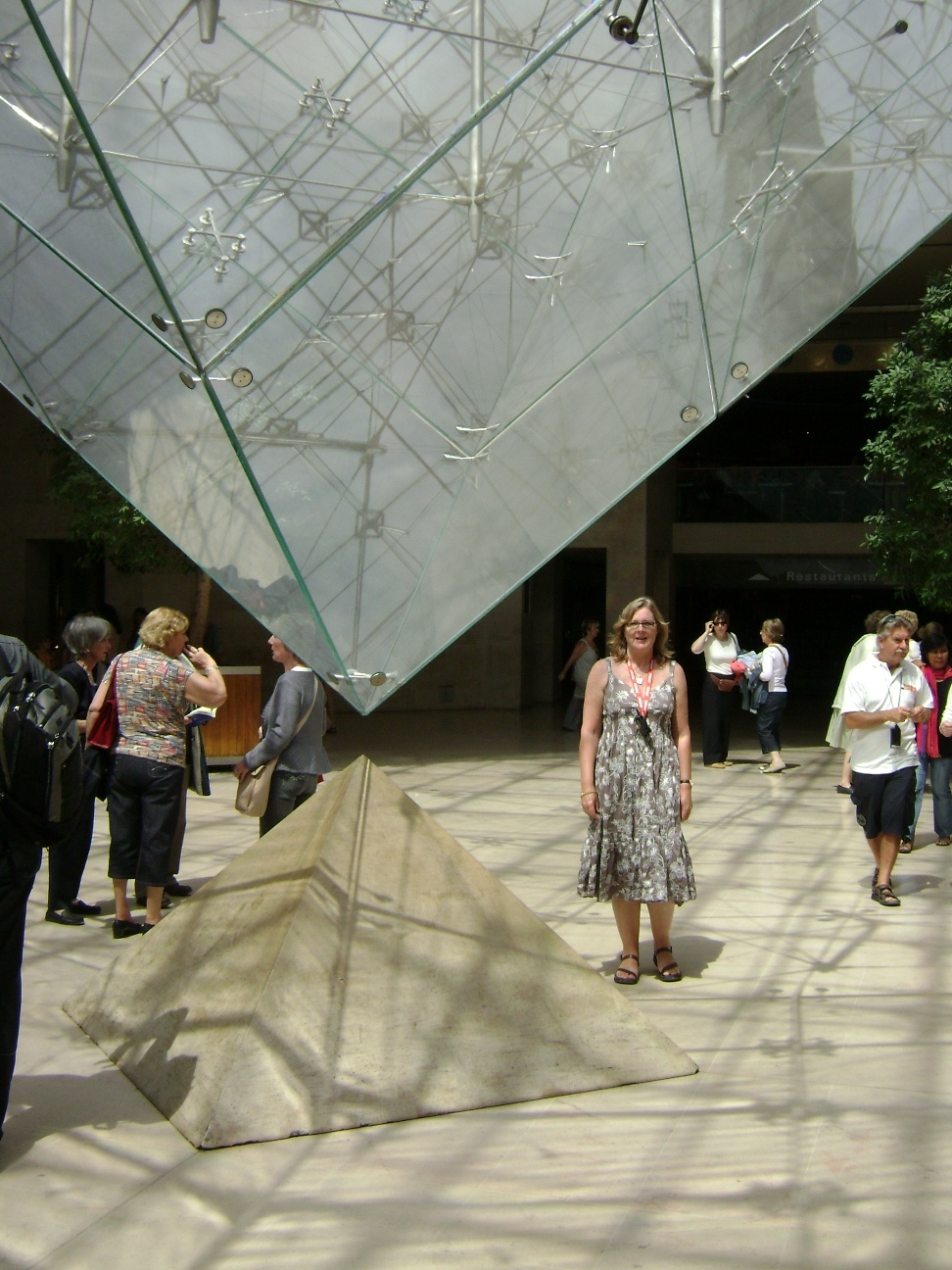
Me standing beside the inverted pyramid at Le Louvre July 2008

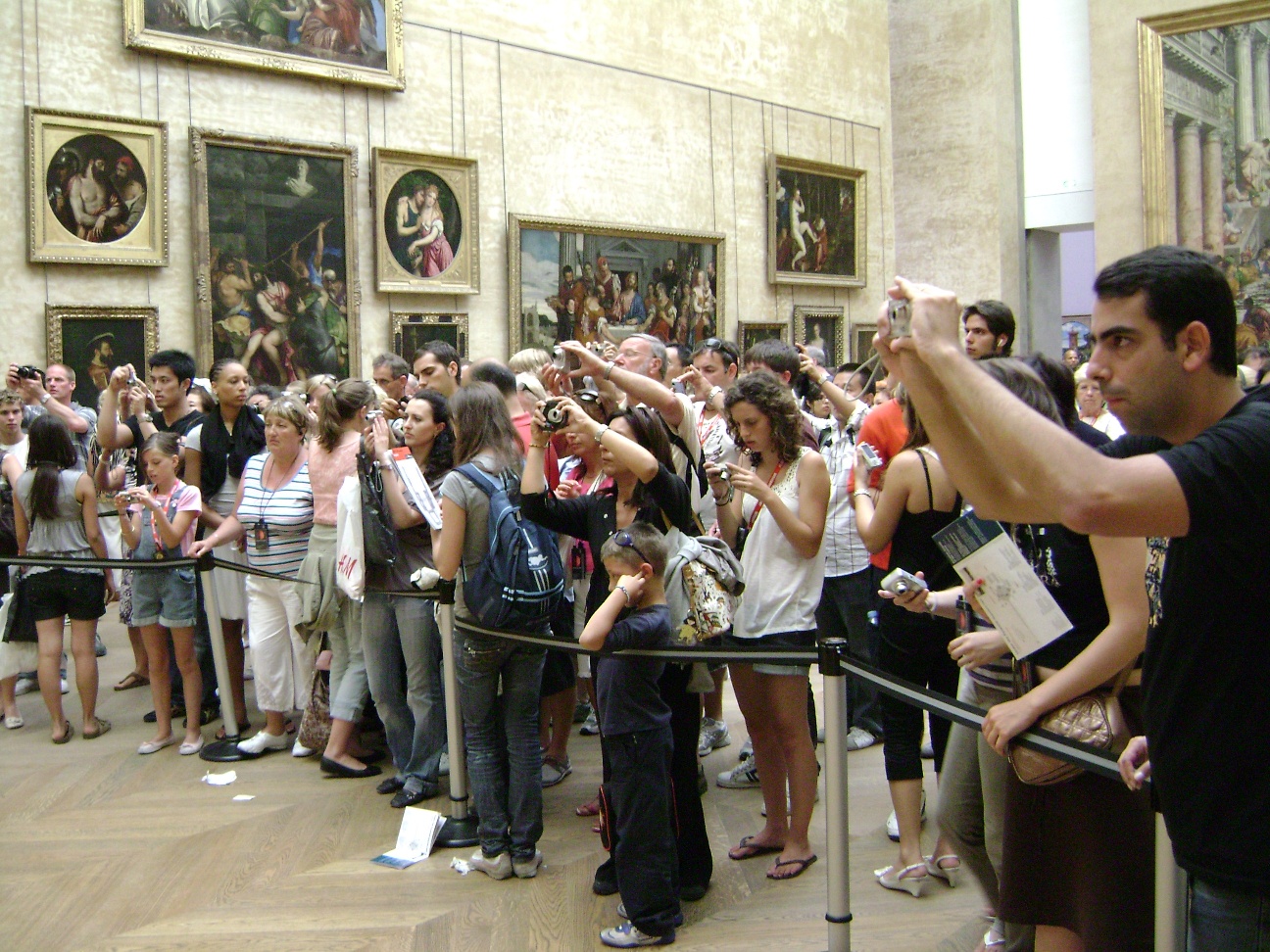
We bunched to see the famous Mona Lisa painting of 1503 to 1506 by Leonardo Da Vinci.

Crowd admiring the Mona Lisa painting at Le Louvre July 2008 (photo by me 2008)

But I was enthralled by the large painting on the opposite wall, The Wedding Feast at Cana by Paolo Caliari 1562 – 1563. The detail on this epic painting stopped me in my tracks.

I think my favourite piece though is The Winged Victory of Samothrace, the Greek Goddess Nike. She commands her place and guards the Art.

The Winged Victory of Samothrace (photo by me 2008)

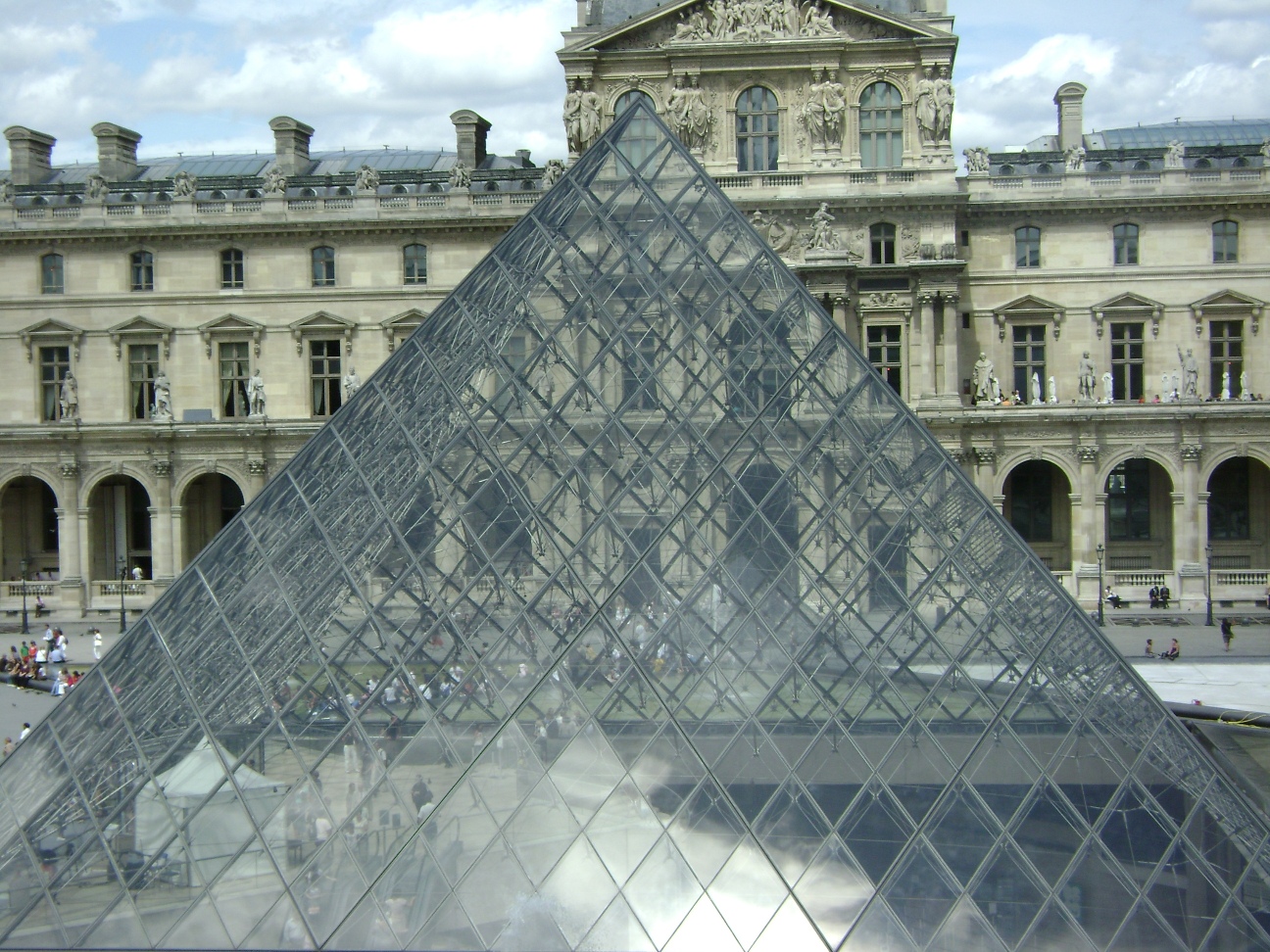
As a lifelong student of art, design, and architecture, I admire The Pyramid of Ieoh Ming Pei that was completed in 1989. Not only does it sit perfectly in the courtyard amidst the old buildings, the underground structure is genius. Standing beside the inverted pyramid below street level I paid homage to the architecture while also being excited to recall the fictional movie of The Da Vinci Code.

Pyramid structure at Le Louvre by Ieoh Ming Pei completed in 1989 (my photo 2008)

Via Google Earth I descend to the courtyard and view the 360-degree images of others.

Musee Du Louvre image screenshot from Google Earth 2024

I follow one of the Visitor Trails provided on the Musée Du Louvre website. I’m happy to choose Beyoncé and Jay-Z’s Louvre Highlights from their music video of 2018. This music video has always captivated me. I love the music, the soundscape, and the juxtaposition of new performance art beside old masterpieces. So, I watched their music video again from my favourites list on YouTube. And of course I followed the Art Trail reading about each artwork.

I delve deeper into artworks via the official website, absorbing more. On the Musée du Louvre YouTube channel, I find more information about the restoration of artworks and the Arc Du Carrousel in the courtyard. I look at the images on their Instagram site.

Musee Du Louvre on InstaGram

Then I stumble upon a magical piece of work featuring Le Louvre in 2020 through the eyes of Flo. I join him as he walks alone through the Louvre. He whispers impressions in French that float on a quiet backdrop of imagined sounds. It is poetic, and art appreciation at its finest.

It’s been a great way to spend a cold winters day at home. I wonder where I will go next on my Armchair Travel adventures.

Learner’s Mind

Some time ago I wrote about a concept I described and labelled SiLLé. It is an acronym that stands for Self-initiated Lifelong Learning experience. It is a behaviour that is grounded in my love of and experience with libraries. It is a habit that fulfills my love of learning, discovery, curiosity, research, and writing.

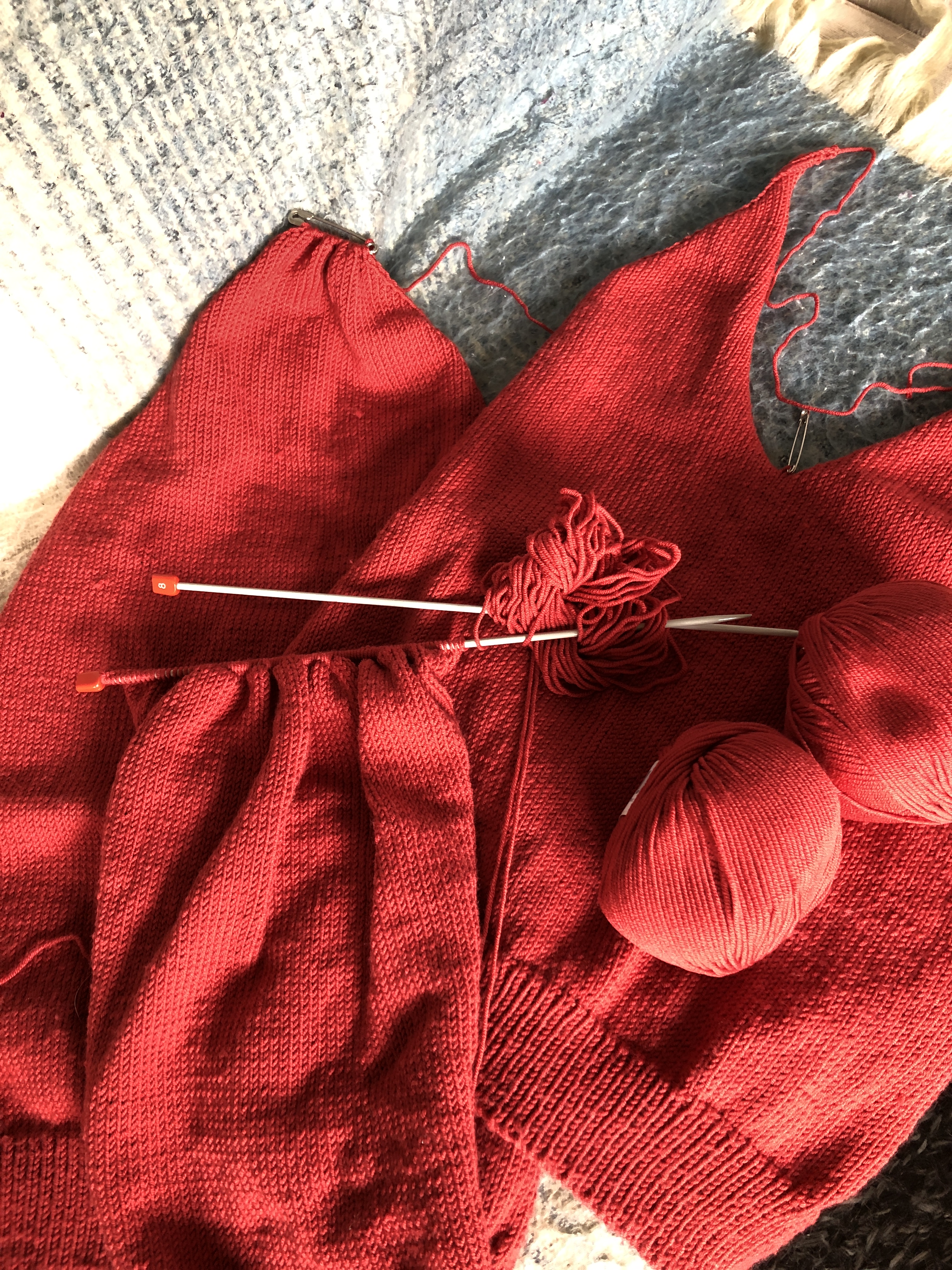
Yes, I am retired now from paid employment and easily and happily fill my days with listening to podcasts, knitting, walking, cooking, sudoku, crosswords, piano playing, French language lessons, yoga, reading, writing, and art.

But there is space in my ever-curious mind for further expansion. Having “finished” researching and writing the family history, a small work of fiction, and my autobiography, I have floundered for awhile between projects, wondering what would be my next path of enquiry.

I love Future Learn which is a MOOC (Massive Open Online Courses). Many courses are offered for a fee, but others are free. Previously I have completed through this MOOC:

  • Mindfulness and Wellbeing for Peak Performance – Monash University
  • Genealogy: Researching Your Family Tree – University of Strathclyde
  • Start Writing Fiction – Open University
  • Management and Leadership – Open University
  • And now I have just completed studying The Book of Kells – Trinity College Dublin

These explorations feed my brain, lead to further enquiry, and expand my knowledge about this world. I note that if/when I ever visit Ireland I will be sure to go to the exhibition about The Book of Kells at the Trinity College in Dublin. In the meantime I can see this unique and exquisite historical artefact here.

I feel no need to embark on further formal study. I have my Master’s in Information and Library Studies. I am not inspired by the U3A courses available locally. I am content to form my own curriculum; my own SiLLé. What rabbit hole will I disappear down next?

Photograph of Fishermen

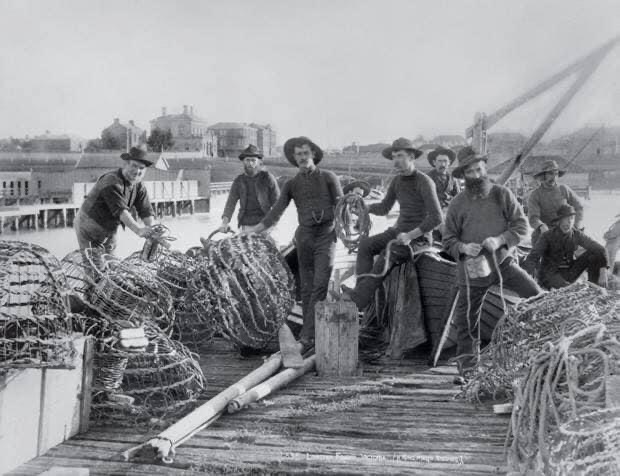
I love this photograph of a group of fishermen standing on a pier.

Lobster fishermen attending to their wicker pots at an unnamed port, western Victoria, ca late 1800’s

I stumbled upon it while doing research for my story, and I became obsessed with it. The man standing in the centre fits the image in my head of the father of my main character. So, I have included the photo in a private “illustrated” version of my tale.

For correct citation purposes I tried to locate the image again, but all searches failed. I posted the photo on the Facebook group “I love Portland” asking if anyone knew of it.

Successful crowdsourcing revealed it is a photo included in a book published in 2011, written by Alasdair McGregor, and titled A Nation in the Making; Australia at the Dawn of the Modern Era. The photo gallery from the book is currently posted on the Australian Geographic website. The inscription reads, “Lobster fishermen attending to their wicker pots at an unnamed port, western Victoria, ca late 1800’s”.

The interest on Facebook was more than I had anticipated, and some went on to say that several of the men were ancestors of theirs, and that this photo was taken because of the union activity involving the crayfish fishermen. It is definitely Portland, Victoria, Australia and probably taken during the 1890’s.

I still love this photo: the snapshot of times past, the clothes and physiques of the fishermen, the strong confidence in their stance, and the masterful arrangement of the portrait. Also, the improbability of such a photo taken at that time and place. I wonder who the photographer of this gorgeous image was.

For me, it links me to that time and place, strengthens my respect, and provides inspiration and validation for my fictional story.

Ancestors Arrivals in Australia

Our ancestors arrived in ships during the 1800’s and early 1900’s. They came from England, Ireland, Scotland, Germany, and the United States of America, hoping for a better life in the new colony of Australia.

During these past months of lockdown in Victoria Australia I have continued to research and compile the family history for myself and my husband.

As Caucasian Anglo’s we knew our ancestry originates in the United Kingdom. The first ship I was aware of was the Hampshire that brought my grandfather and family to Australia in 1887. Although he was just a toddler at that time, he remembered the name of the ship and told me many times when he was alive, and I was a girl.

He ignited my curiosity that has stayed aflame all of my life. So began my family history research journey.

As I delved further into each branch of the family tree, I discovered more ships that brought our ancestors to Australia. Here is a list of those ships and the ancestors that sailed on them:

  1. 1819 Prince Regent departed London 17/9/1819 Plymouth to Sydney. Richard Roberts was convicted at Old Bailey for stealing one coat to the value of 5 shillings belonging to William Payton. Sentenced to 7 years transportation. Occupation noted as ‘Whitesmith’.
  2. 1826 Sir Charles Forbes departed from Plymouth to Van Diemen’s Land. Hannah Holland was convicted in Stafford for larceny of cloth and 4 shawls. Transported for 7 years. She was a member of the “Pottery Gang of Thieves”. The ship departed on 31/8/1826. Hannah gave birth to a daughter Mary Ann Plant while on board the ship. On 6/1/1827 they were hospitalised in Hobart Town. The baby died on 17/1/1827.
  3. 1827 Asia I London to Van Diemen’s Land. John Wesley was convicted for burglary at Nottingham on 15/3/1827. He was sentenced to life and transportation as a 19-year-old.
  4. 1829 Lord Melville II departs London on 5/1/1829 and arrives in Port Jackson 6/5/1829 with 170 convicts Dublin Ireland. John Higgins from Dublin, Ireland, was convicted on 5/11/1827 at Lancaster Quarter Sessions for a sentence of 14 years.
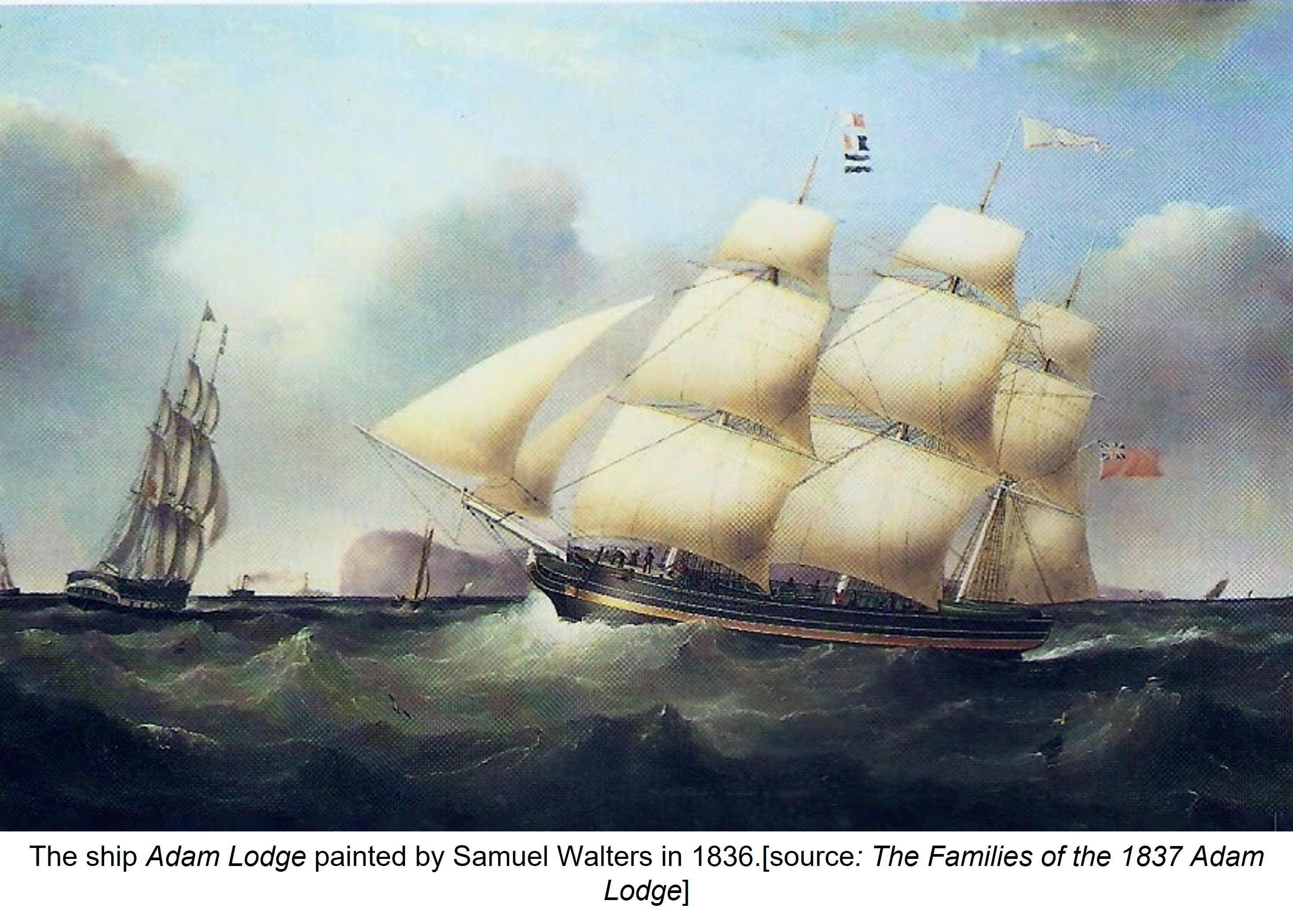
  5. 1837 Adam Lodge departed from Londonderry Ireland to Sydney arrived on 13/7/1837. James Morrow was a 12-year-old boy from County Tyrone, Northern Ireland, and travelled with his parents Joseph Morrow and Phoebe (nee Jamieson), and one other sibling.
  6. 1838 Palmyra England to Sydney 26/9/1838. On board were John Parker 38 (carpenter) and wife, Hannah Parker 38, and children Tryphena 11, Jane 15, Miriam 9, Keziah 5, another 3, and Mahala 1. They were from Brede, Sussex, England.
  7. 1841 Helen departs Liverpool on 4/4/1841 and arrives in Port Jackson on 21/7/1841. On board were Jonathan Weir (34-year-old carpenter) and Ellen Weir (29) with 7-year-old daughter Eliza.
  8. 1842 Robert Benn departed Greenock Scotland 20/9/1841 and arrived in Melbourne on 26/1/1842. Nathaniel Simpson travelled with wife Dorothea and daughter Ann and son William. They were from Downpatrick, Ireland.
  9. 1842 Arab London 7/11/1841 to New Norfolk Tasmania 31/3/1842 George Burt was 17 years of age travelling with his father, mother, and five siblings. They were from Walton, Somerset, England. They then travelled aboard the Shamrock to Melbourne on19/4/1849.
  10. 1844 Elizabeth departs Liverpool on 3/10/1843 and arrives at Port Jackson on 20/1/1844. Aboard was Maria Morrow with her family, father George, mother Elizabeth, and siblings. They were from County Tyrone, Northern Ireland.
  11. 1848 Marchioness of Douglas departed from Greenock Scotland and arrived in Melbourne on 27/1/1848. James Fleming was 37 and arrived with his wife Margaret 34, and sons Peter 9, William 5, and James an infant. They were from Glasgow, Lanarkshire, Scotland.
  12. 1848 Aurora Plymouth to Geelong 7/12/1848. On board was William Hartley a 22-year-old laborer emigrating from Devon, England.
  13. 1851 Stebonheath Plymouth to Geelong arriving 16/12/1851. Mary Kerr was a 16-year-old girl travelling with her sister Flora who was 14 years old. They were from Inverness, Scotland.
  14. 1852 approx. Unknown ship. Henry Bentley was about 22 years of age when he travelled to Australia. He came alone leaving behind his family in Kent, England. It is not known the ship he arrived on or the exact date.
  15. 1853 Bride Plymouth to Melbourne 17/5/1853. Catherine Fitzgerald was a 23-year-old domestic servant from Tipperary, Ireland, and one of the many single young Irish women who came to Australia to become a bride. She married Henry Bentley soon after arriving in Melbourne.
  16. 1853 Helen Lindsay Plymouth to Melbourne arriving 17/7/1853. Edwin Hammond arrived with wife Elizabeth (25), son Edwin (3) and daughter Sophia (1). They were from Chichester, Sussex, England.
  17. 1853 Wilhelmsburg Hamburg to Melbourne arriving 24/8/1853. Aboard was the 29-year-old single man John Backmann from Stralsund, Germany.
  18. 1854 Ameer London to Melbourne 2/2/1854. William Catchpole was aboard travelling as an 18-year-old single man leaving his hometown at Aldgate, London, England.
  19. 1855 Shand Plymouth to Portland, Victoria 20/1/1855. Thomas Smith (a tailor) arrived with wife Sarah and five children from Gloucester, England.
  20. 1855 Epsom Plymouth to Geelong arrived 27/4/1855. On board was Mary Ellen Mullins (20-year-old) and Judith Mullins (22-year-old). Mary was the daughter of Patrick Mullins and Mary Higgins, and she was born in 1835 in Galway, Ireland.
  21. 1856 Ocean Chief departed Liverpool on 8/10/1855 and arrived in Melbourne on 25/1/1856. On board was the 20-year-old Edward Harris from Shepton Mallet, Somerset, England.
  22. 1857 Admiral Boxer arrived in Geelong on 9/3/1857 having departed from Liverpool. On board was the 26-year-old housemaid from Gloucester, England, Harriet Bushell.
  23. 1857 Beejapore London to Sydney 19/3/1857. Alexander Black arrived alone as a 23-year-old man. He left behind his parents and siblings in Kinross, Scotland.
  24. 1858 Parsee arrives in Melbourne on 14/5/1858. Matilda Colee arrives with her younger children, to meet up with her husband Henry who had arrived six years earlier. They were from Shoreditch, Middlesex, England.
  25. 1861 Prince of Wales London to Melbourne, 23/8/1861. George Newman 27-year-old arrived with Henry 62 (trader), brother James 20, and sister Sarah 24. They were from London, England.
  26. 1864 Champion of the Seas departed England 4/8/1864 and arrived in Melbourne 15/11/1864. 45-year-old Daniel O’Connor was aboard with his wife Mary 38, and children, Mary 22, Cornelius 21, Michael 17, Ellen 16, Kate 14, Hannah 12, Bridget 10, Daniel 8, and Patrick 6. They were from Cork, Ireland.
  27. 1871 Star of the Mersey Calcutta to Melbourne 25/6/1871. Aboard was the 37-year-old Henry Colee, son of Matilda and Henry Colee who had arrived earlier. They were from Shoreditch, Middlesex, England.
  28. 1887 Hampshire Portsmouth to Fremantle. John McKinna and wife Jane McKinna travel with six children to Fremantle. Then in 1888 they travel aboard the South Australian from Fremantle to Melbourne 6/2/1888. They left behind extended family in Newton Stewart, Wigtownshire, Scotland.
  29. 1908 Marama Vancouver to Honolulu then to Sydney. Arthur Gregory Duncalfe arrives with wife Beatrice. They left behind extended family in Spokane, Washington, United States of America.

These ships that brought our ancestors to Australia form just part of the story. From these arrivals I document the families as they settle here in Australia and become Australians. I feel humbled by these stories that show courage and tenacity. They left behind difficult circumstances, only to have to toil harder in a harsh developing colony.

Finally, after many years of gathering stories, photographs, and documents, I have finished compiling the Bentley-Smith family history. It is 280 pages in length listing as many facts that I could corroborate. I hope it is a lasting legacy for family members. But I will keep on looking for that ship that brought Henry Bentley to Australia.