Castles, Dogs and Roundabouts

We are just back from a trip to the United Kingdom and Ireland, and my non-scientific observation is that there are more castles, dogs, and traffic roundabouts in the UK by a huge margin compared to Australia.

Traffic roundabout at Tenby in Wales

The purpose of this trip was not to make comparisons at all but to make a personal pilgrimage to our ancestral origins. After years of family history research, I had found the places that our relatives lived prior to their immigration to Australia (and the USA in one case).
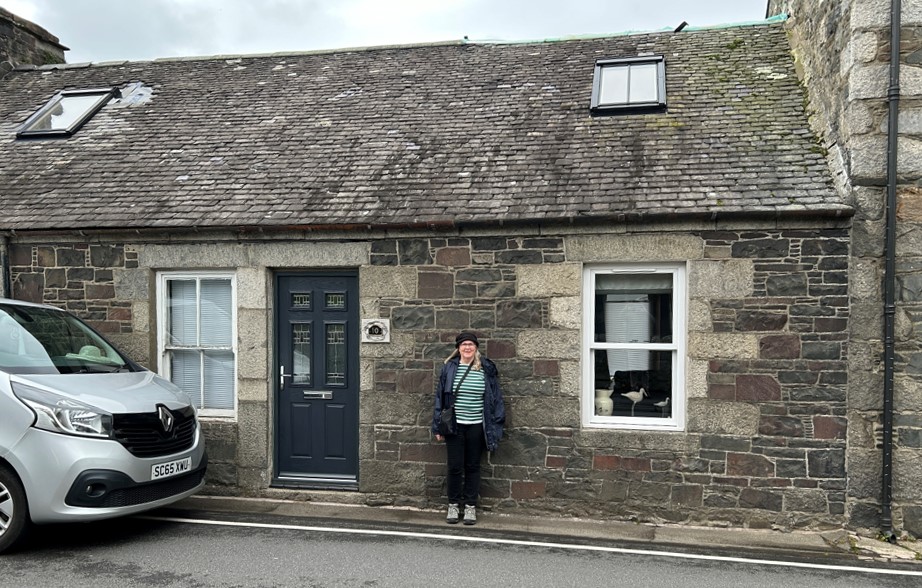
Susan outside ancestors home in Newton Stewart, Scotland

We had a couple of actual addresses and we visited these houses, knocked on the door, and had lovely conversations with the current residents. They were very interested to hear about the lives of people who once lived in those places.

Michael outside ancestors home in Sandwich, England

We also wanted to see as much of the UK and Ireland as we could in about six weeks, because the trip from Australia is awful, and a real deterrent and we doubt we will do this trip again. So, it really was a once in a lifetime journey for us. Well, second, as we had flown in and out of London back in 2008.

We spent a few days in London at the beginning of this trip and visited some places we had not last time. We had done the actual version of my armchair travel exercise and we were keen to get out of the city.
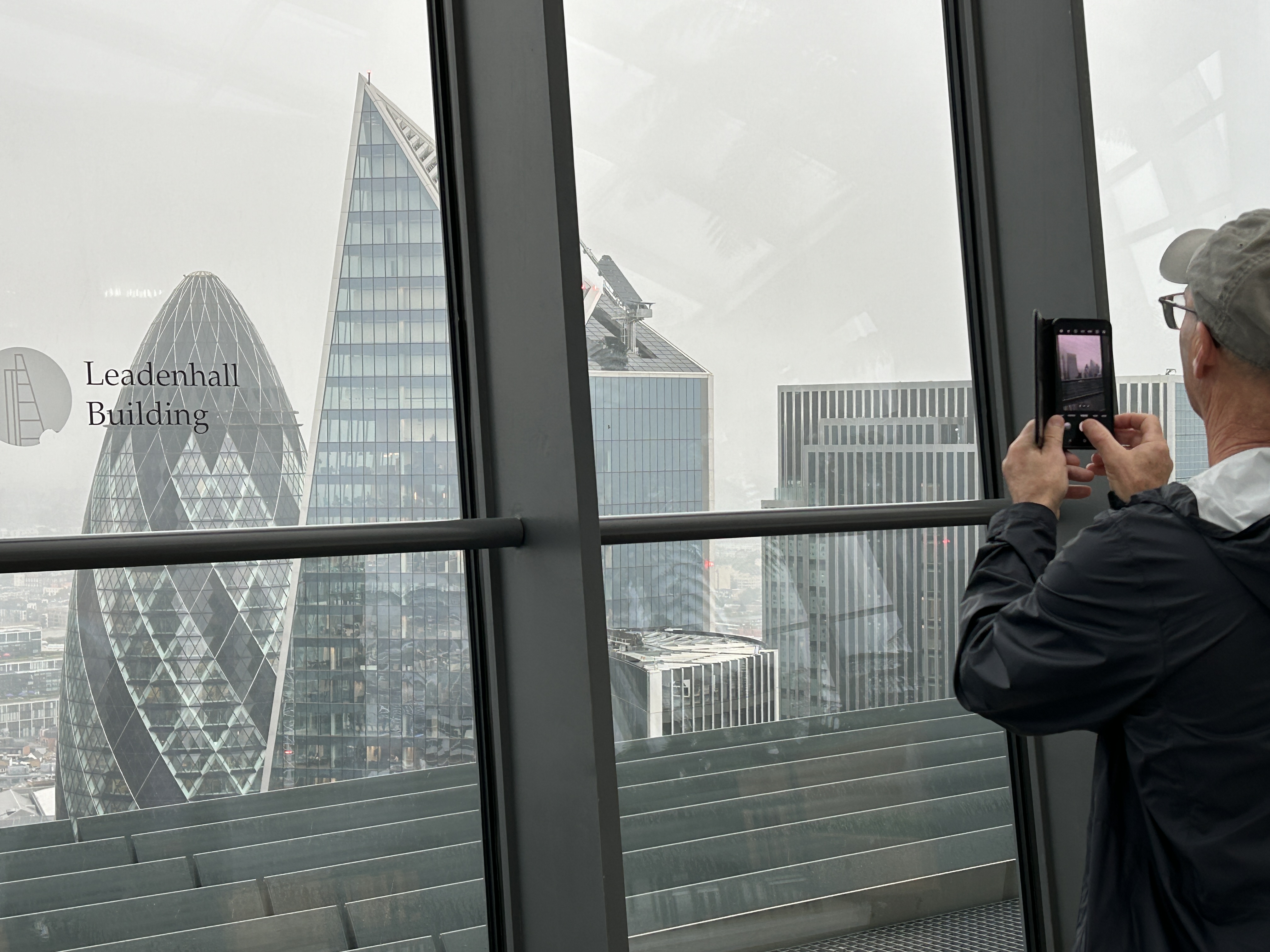
Michael at the Sky Garden in London.

I had formed a loose itinerary, noting the places we wanted to see. We aimed to visit possibly two castles; however, it is hard to avoid castles, and we ended up visiting eleven up close. The most impressive to us is Arundel Castle in England.

Arundel Castle in England

Here is a list of the castles we visited in the order that we were there: (Learning about the history of these castles is something else and I have provided the links for more information:

There were other places we wanted to see motivated by those gorgeous photos seen online, such as the Harry Potter train and bridge known as the Jacobite Steam Train and the Glenfinnan Viaduct, a particular curved street in Edinburgh, Portree and the Old Man of Stor on the Isle of Skye, Eilean Donan Castle, the Dark Hedges in Northern Ireland, to name just a few.

Jacobite Steam Train traversing the Glenfinnan Viaduct, Scotland

And while we did make it to see these places and to take another iconic photo, there is a lot the camera does not pick up. Such as full car parks, queues of gridlocked traffic, crowds and queues of people, bad weather obscuring the view, no place to stop the car, and other things.

Driving through the Scottish Highlands

And while those places are not to be missed, and we chased the touristy things like everyone else, we also found lots of beautiful places and experiences in other areas that are not earmarked for the tourists. Ballintoy Harbour in Northern Ireland is one of those, and we enjoyed scrambling around on the rocks looking out towards the Atlantic Ocean and the Isles of Scotland. By chance we discover that this is where they filmed the scenes for the Iron Islands in Game of Thrones.
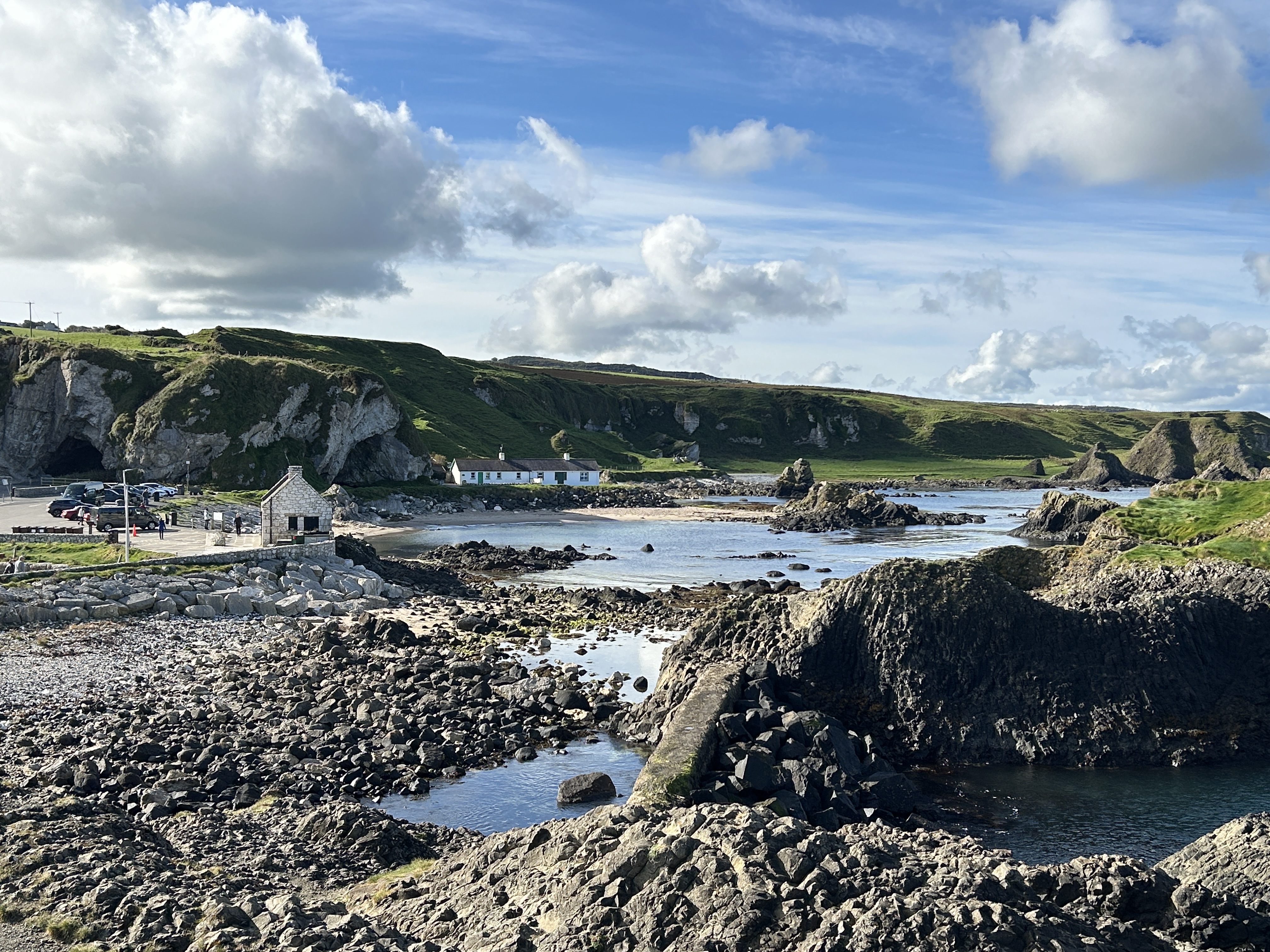
Ballintoy Harbour, Northern Ireland

We were blessed with beautiful Autumn weather. The sun shined, the skies were blue, and we often wore tshirts. I imagined striding across the Battlefields of Culloden with icy rain beating our faces, but it was a gorgeous stroll along the paths beside the grassy fields, under a blue sky.
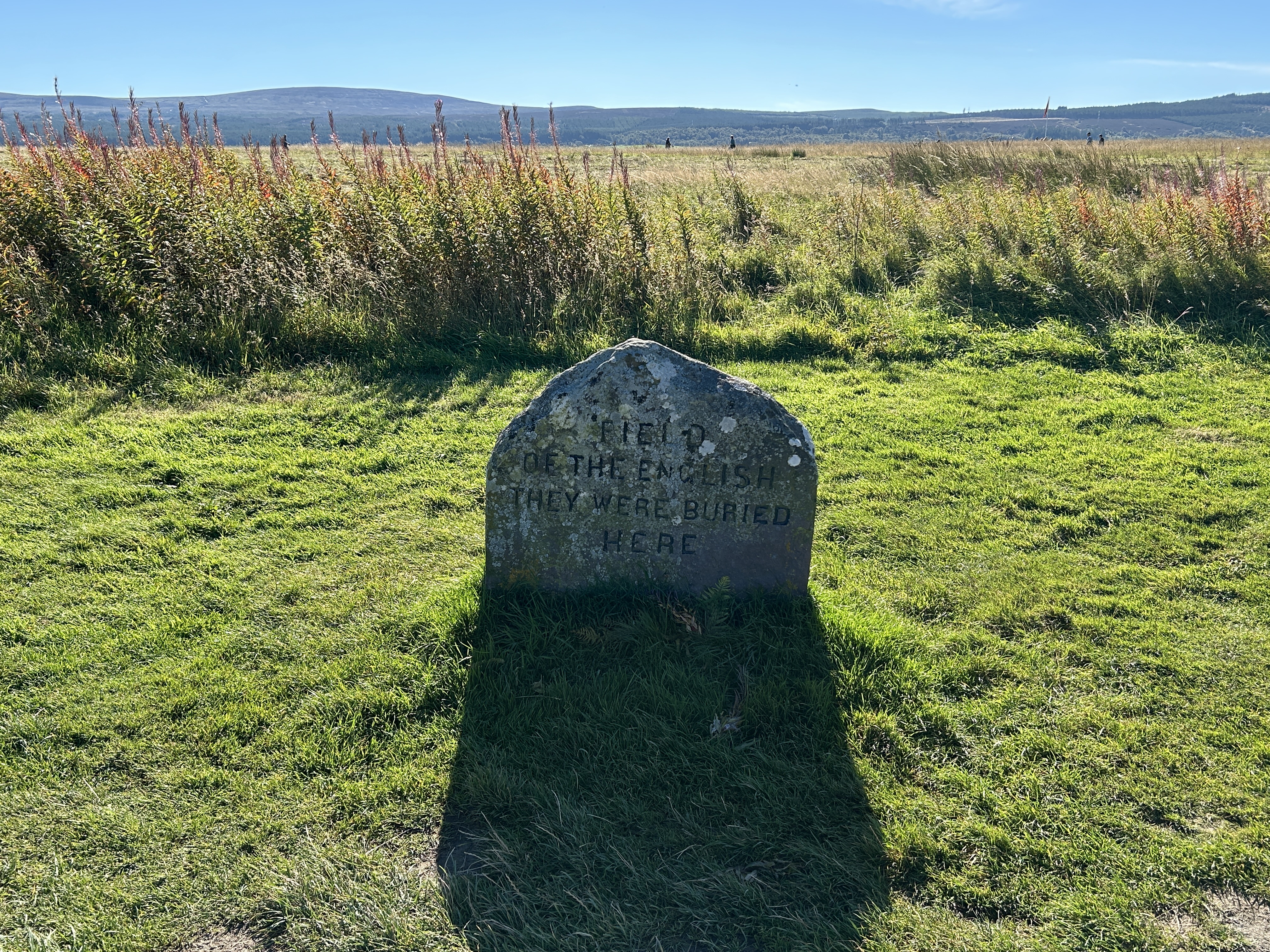
Gravestone at the Battlefields of Culloden, Scotland

These are some of the highlights of our trip:

We loved meeting and talking with local people, everyone always friendly. Although we were often mistaken as ‘British’ until we clarified that we are Australian.

I never got tired of the green fields and lush forests.  
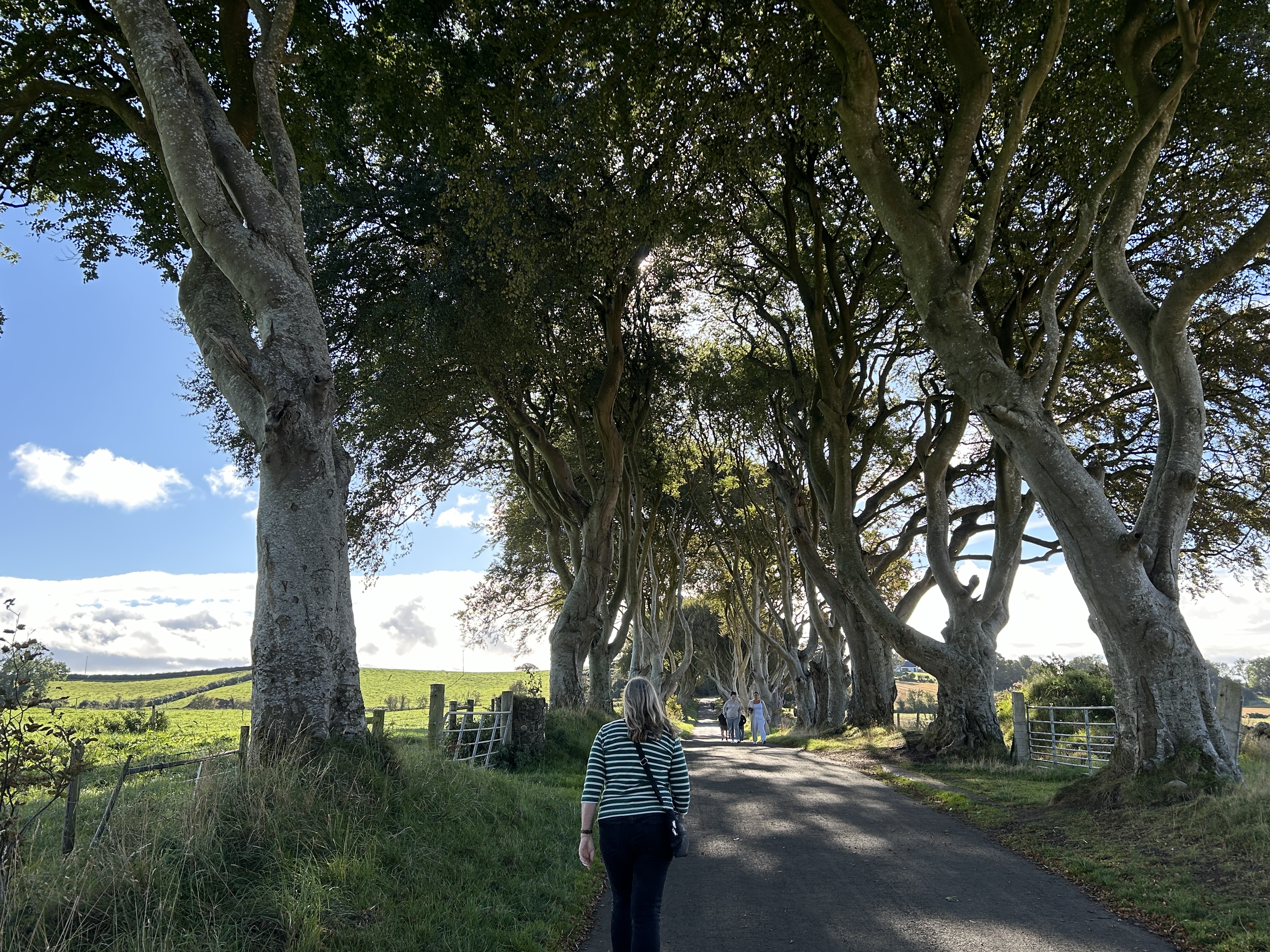
Susan walking along the Beech tree lined road of the Dark Hedges, Northern Ireland

Seeing squirrels in the beautiful city parks.

Hearing bagpipes in unexpected places in Scotland is a treat.

Looking for the Loch Ness Monster while aboard the cruise boat and hearing their theories.

Seeing the bold Harry Potter train chug happily across the Glenfinnan Viaduct.

Driving through the Scottish Highlands is breathtaking and tempts you to hike and explore.

Looking for quaint fishing villages and finding many.

Tenby Harbour, Wales

The Isle of Skye is reminiscent of New Zealand.

Walking up to the Old Man of Stor and not making it, but seeing the sea and lakes appear below the morning fog, reflecting the blue sky.

View from the trail to the Old Man of Stor, Isle of Skye

The beauty and smallness of Ireland and Scotland.
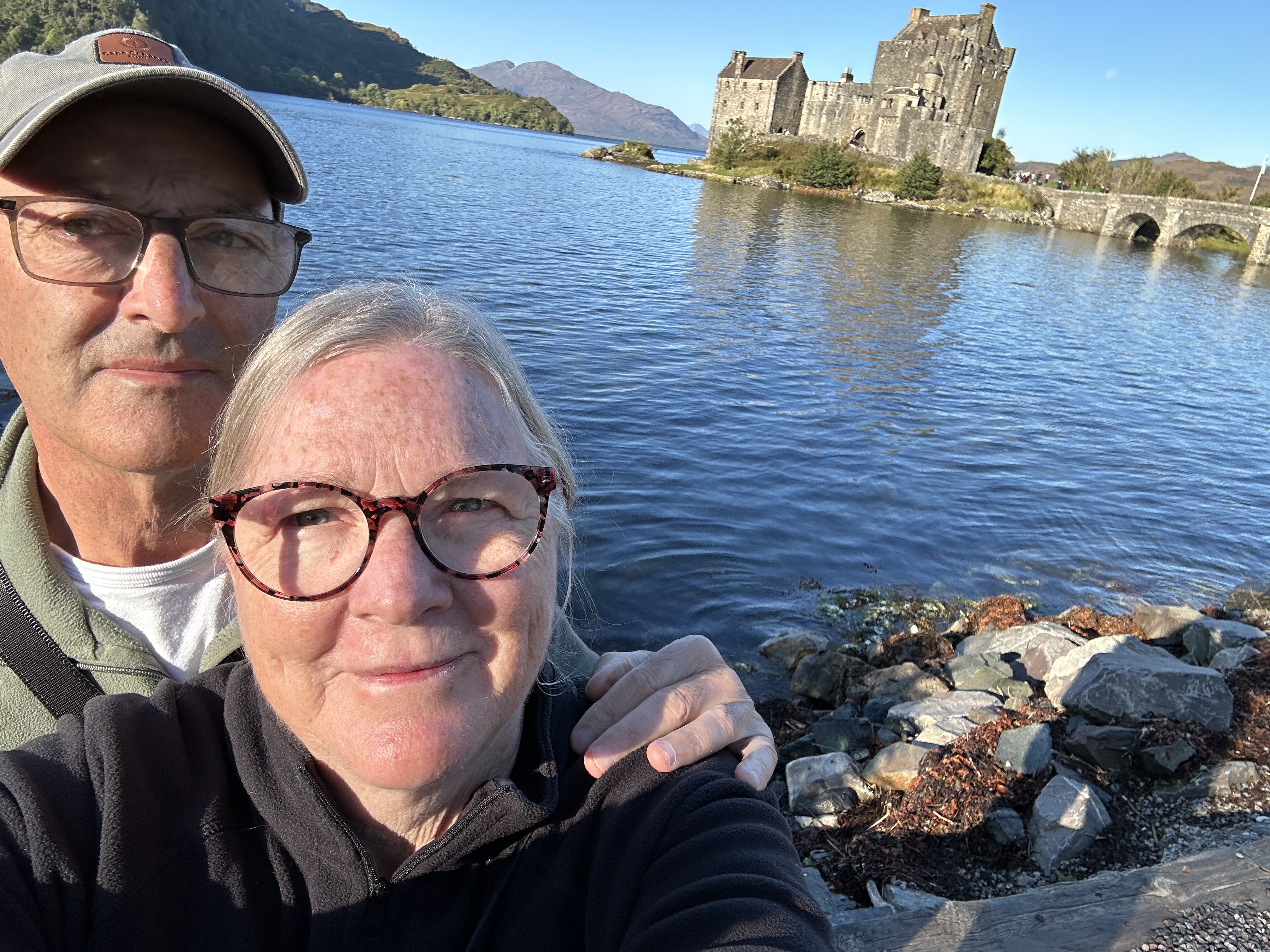
Michael and Susan at Eilean Donan Castle, Scotland

The sea ferry journeys between Scotland and Northern Ireland, and then Dublin and Wales.

We spent 37 nights staying in 28 different B&Bs or hotels, using Booking.com as our guide.
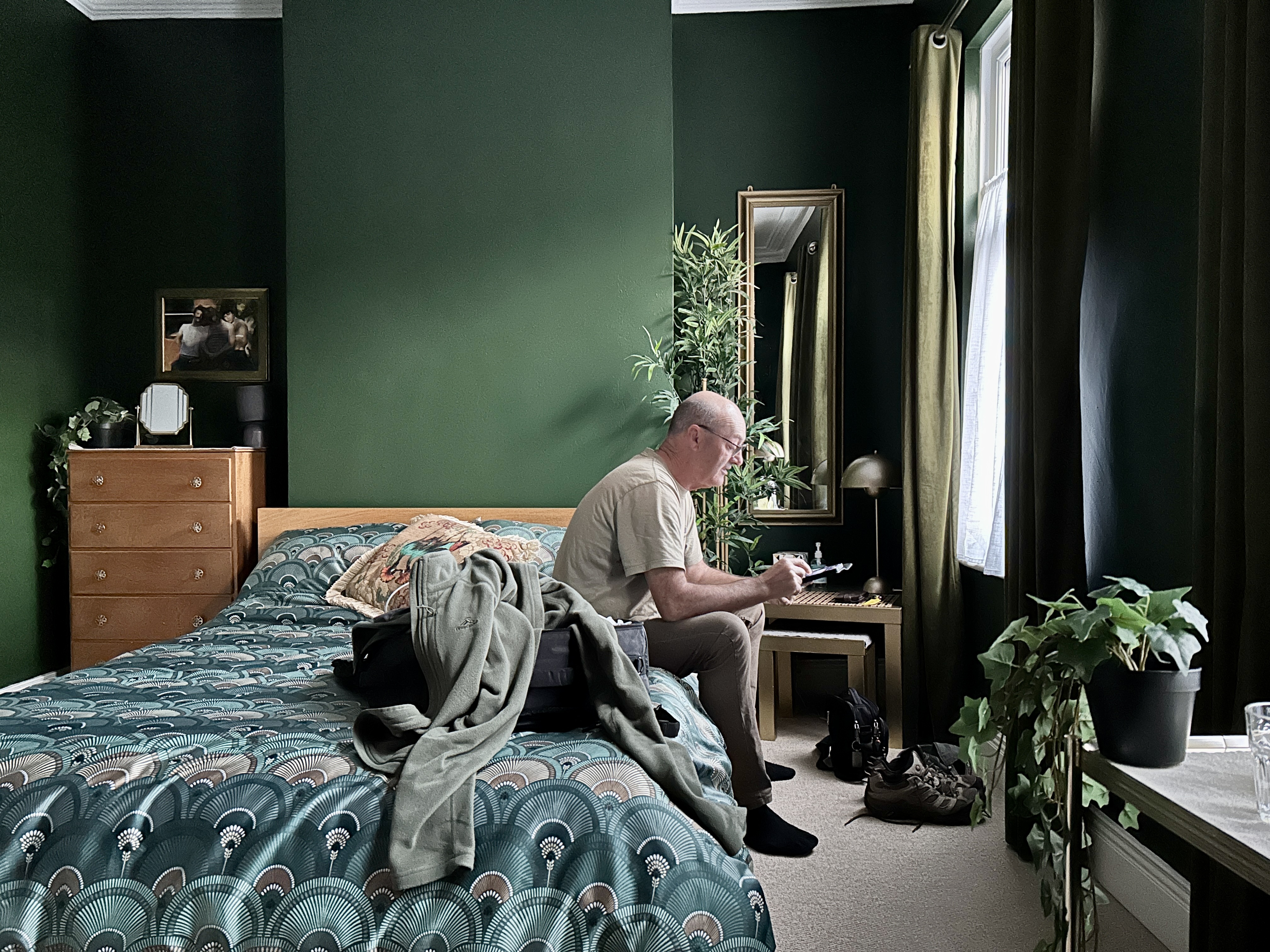
Michael planning the day ahead, Belfast, Northern Ireland

In Blarney Ireland we met a formerly unknown distant cousin who had reached out via Ancestry DNA Matches, and we spent a lovely time with him, sharing our stories, and chatting about history.

Distant cousins at Kanturk Castle, Ireland

We are exceedingly happy to be back home in Australia, glad of the experience, and we are still processing all that we have seen and what this means to us. We have so many photos and I am still sorting through them. I will probably make a few photo stories for our own reminiscing.

Stonehenge, England

As a personal pilgrimage it was invaluable and gives more meaning to our own family histories. I will add a chapter to my story.
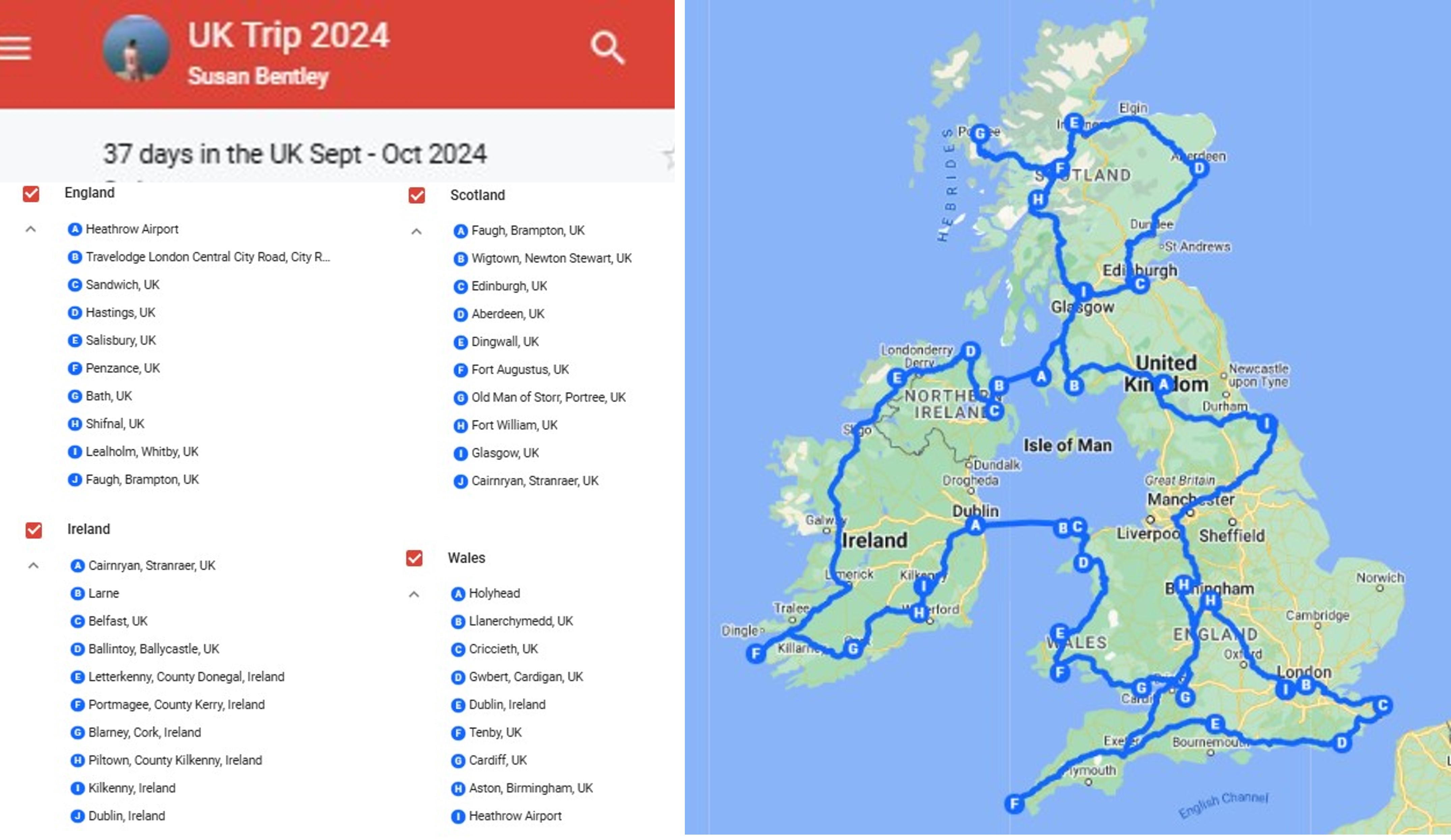
Map of trip route 2024

Lockdown Life

Since we have returned to “normal” life, after our adventures, we have been in lockdown with the rest of Melbourne and Victoria. My husband misses his weekly golf games with his mates and looks forward to when he can do that again. I am quite happy and occupied at home. We are both fully vaccinated.

Images during lockdown life 2021

These are some of the things I have been doing:

  • Family History Research

After decades of saving bits of information, stories, and photographs, I am finally compiling it all and see an end in sight. A bonus has been the remote access to the Ancestry Database. This has allowed me to fill in lots of gaps and extend my tree.

So far, I have found 22 ships that our ancestors arrived on, mostly from England, Ireland, and Scotland, one American, and one German. Three convicts on my side and one convict on my husband’s side.

Some of the ships my ancestors arrived on emigrating to Australia

I have one mystery that I cannot solve, and he is a key ancestor. I have found him in England and found him in Australia, but I don’t know when he arrived exactly somewhere between 1851 and August 1853. Perhaps there is a major misspelling somewhere that has not translated well into the digital files.

The excellent course I completed online through Future Learn has added a richer dimension to my research. I know what I am doing. Genealogy: Researching Your Family Tree, Future Learn UK.

  • Exercise
    • Walking within the five-kilometre restriction. This can include a solid upward walk with views of the bay. Logging these on Strava gives an added interest.
    • Cycling along the foreshore track now and then.
    • Unfortunately swimming at the local pool is not allowed at the moment. We look forward to when we can go back there regularly.
  • Creating
    • I finished an oil painting that I had on my easel for too long. Marg’s elephant at Salvia Court. And started a new painting.
    • Cooking lots of yummy food that we then have to share between the two of us. Cheesecake, Lemon Meringue Pie, Apricot Sour Cream Tart. Practicing for when our family can get together once again.
    • I practice playing my piano occasionally.
  • Media consumption
    • Reading The Fatal Shore by Robert Hughes. His interpretation of those early years offers only stories of flawed humans, on all sides of the equation, trying to survive on this Earth. There are no heroes in this tale.

My Family History

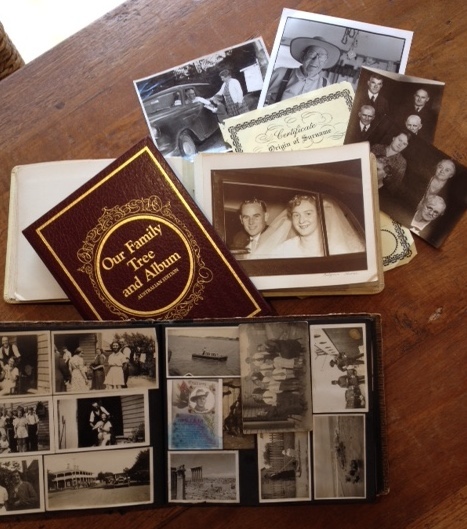
Surrounded by piles of photos, prints and digital, and indebted with family facts and stories, I struggle to shape it into a sensible narrative.

IMG_7865

Curating the family history is a challenging exercise and yet I am enthusiastic to weave it together for prosperity and for anyone who might someday wonder.

This is something that has interested me for many years and I have been on some previous fact finding missions that revealed things we didn’t know. I love to find out about our origins and the lives of our ancestors. I can name three ships that brought different branches of the family to Australia: The Hampshire, The Shand, and The Niagara. I love to see the photos of ancestors to spot the family resemblances that crop up unexpectedly.

Not a ‘scrap-booker’ by nature I think that ultimately a hand crafted personal creative book would be a beautiful result. In the meantime I have begun to do a simple storyboard using PowerPoint to set out my narrative. There are obvious important gaps that need to be filled somehow.

So I think about others in the family who have compiled remarkable genealogies that are relevant and interesting to my story. One of my father’s cousins has passed away now and I wonder where that wealth of knowledge is now. Another cousin of my husbands father must be very old now if not also passed away – where is her lovely story and impressive pedigree charts now? Another – my cousin is contactable, but that branch of the family story is well documented already, so not as pressing.

Some of the old photos are gorgeous but without captions the identities are a mystery. ‘A picture tells a thousand words’ but also presents many questions; such a who, where, when, why.

This historic photo for example is of the family of Smiths who lived in Portland Victoria Australia. One of the boys is my paternal grandfather.

Smith_family_in_Portland_1920

Family members who knew them previously identified the others in the photo. A scribble on the back of a print states that this photo was taken in 1920 in Portland, just prior to the family being ‘separated’. The father and mother of this family are not in the photograph because they had both passed away. I know the story and it is a tragic tale that I will include in my personal family history when the time comes.

Meanwhile my investigations continue and I try to wrangle this precious pile of pictures into something interesting and useful.

You are what you read

Are you influenced by what you read? Does your mind absorb the ideas set down by others? Do you live inside the scenes created, even temporarily? I suppose that’s why reading fiction is a form of escapism.


As a Librarian it is no surprise that I value books and reading for self improvement. I value learning from the experiences, and thoughts that others have worked so hard to set down in words. The more you read the more you learn. Even if you don’t retain it all and reject some ideas, we grow and evolve by taking on a little bit from each book we read.


At the moment I am reading a novel titled Deception” by Michael Meehan. It is about a young Australian man who traces his ancestry to France in order to unravel his family history. It is exquisitely told, set in the Australian desert, Paris and New Caledonia. He weaves his tale masterfully between the past and the present. I have engaged in tracing my family history in the past and yet for the first time it has occurred to me to trace the one French branch of my family tree. It would be so interesting to learn some more French history while unraveling my own family tree, also fulfilling my love of all things French.


Meanwhile someone close to me has discovered they have cancer. It is a shock. I remember reading a few years ago a book titled Your Life In Your Hands” by Jane Plant. She is a UK scientist who had breast cancer, suffered through chemotherapy, a mastectomy, radiation treatment, and was eventually given 6 months to live. As a scientist she researched the situation thoroughly, eventually having a “light-bulb” moment thinking that in Asian cultures the incidence of breast and prostrate cancer is remarkably low and they don’t eat dairy products. Eliminating dairy products from her diet from that moment the tumors shrank and disappeared altogether. She wrote her book in 2000 and now in 2008 she is alive and cancer free. Her experience, research and discoveries provide hope and practical advice for others facing the cancer death sentence. I gave the book to that person to read and make up their own mind. After all what have they got to lose?


Not only are we what we read but we are what we eat!