10 books to make you think

Think” is the theme for March on the National Year of Reading calendar and to support that topic I offer my shortlist of books that have made me think and changed the way I think. @love2read

Do you think? Or are you a slave to habitual thought patterns instilled in you from your ego, your body, your upbringing, society? Are you willing to challenge and change your thinking? Do you want to be an original thinker? Be the creator of your own life experiences? Or are you content to follow the herd?

I have always enjoyed challenging and testing my mind and feel a personal need to reach for greater awareness and understanding. Some would say I think too much. But I disagree and tend to think most people don’t engage their mind in original thought enough.

So here are some books that have been instrumental in raising my awareness from one level of thought to the next. They are in order of when I read them.

The Road Less Travelled: A New Psychology of Love, Traditional Values and Spiritual Growth by M. Scott Peck 1983

This is an oldie but a goodie and a “Number 1 International Bestseller”. Dr. M Scott Peck practised as a clinical psychiatrist and offers anecdotes from his psychotherapy sessions with patients to explain his thoughts about the concept of “love” and then provides meaning that is not what many of us think of as “love”.

When I read this book many years ago it certainly changed my thinking and gave me some new ideas to test. My old copy looks dated, and even some of the style, prose, and premises seem old fashioned now.

It was an important work at the time but maybe many of us “got it” and have since evolved. The concept of “love” continues to be pedalled through popular media with the same old neurotic premises though, so maybe it’s time for a new version on this topic prepared for a new audience.

Illusions: The Adventures of a Reluctant Messiah by Richard Bach 1977

As I have stated before this book rates as my Number 1 favourite of all time, and has never been knocked off that pedestal in the many years of reading since.

I like its simplicity, the gentle tone, the story about pilots and flying, the spiritual lessons, and the overall message that life is far more complex, mysterious, and full of possibilities than we can ever imagine.

The Master in the story teaches the student that all is not what it seems and that to see more you have to be able to see through the veil of existence. This requires a shift in thinking, perspective, and common notions of reality.

“Here is a test to find whether your mission on earth is finished: if you’re alive it isn’t.”

The idea about manifesting things – physical things – into our life I find magical and compelling. The image of the blue feather became a lovely experiment in manifestation that remains with me to this day. And this no doubt led me to look closer at the book A Course In Miracles when it appeared one day.

Zen and the Art of Motorcycle Maintenance  by Robert M. Pirsig 1974

Pirsig seduces the reader into an apparently simple tale about a father and son who go on a motorcycle trip with some friends across parts of the United States of America. To pass the time the father, who is the narrator considers the deeper meaning of concepts such as “quality” using examples they see along the way such as the geysers at Yellowstone National Park.

It forms an interesting gentle conversation that is soon disturbed by the returning fragments of memory of the narrator. Things are not what they seem at all. The narrator has a past that he is recalling bit by bit and this clouds the story with an unusual twist. He has had mental problems, a breakdown perhaps. He is drawn to discover his past with his son, reluctant now, in tow. And who is this Phaedrus character in this story?

A second reading of this book was necessary for me because I became lost the first time. Once understood though I loved the depth of discussion and the analysis of concepts that were cleverly woven into a simple tale of a motorcycle trip. The descriptions of practical motorcycle maintenance and how the right attitude can improve the overall performance and experience of owning a motorcycle, was the defining message that can be applied to all of life’s tasks.

The Celestine Prophecy: An Adventure by James Redfield  1993 and An Experiential Guide by James Redfield and Carol Adrienne 1995

The Celestine Prophecy: an Adventure is a simple tale of a quest to find some ancient manuscripts that contain the insights about human existence and how to steer humanity from its destructive path. It is a quaint and predictable story that has since been made into a movie.

The companion book An Experiential Guide guides the reader towards finding the deeper meaning of our lives and to discover our main life purpose. Using the nine insights as a framework questions are posed that assist us in examining our own life story. We can then understand the key issues within the context of our own life.

I like this tool for analysing and understanding why we behave and think the way we do. Our past, especially within the context of our upbringing and our families, has shaped us to be the person we have become. To really understand this in context helps to free us towards our own individual life experiences. It releases us from blaming our past and liberates us towards an original journey.

Echoes of the Early Tides: a Healing Journey  by Tony Moore 1994

Tony Moore wrote Cry of the Damaged Man after being involved in a near fatal car accident. Suddenly his work as an emergency room doctor ceased and he became the patient, like so many he had attended before.

Echoes of the Early Tides continues his personal exploration of the healing process as a sequel to the former work. It is a compelling, beautiful and sometimes abstract description of how he steers his mind from being drawn towards a black abyss of no return. He wanders the beach and coast seeking solace and healing; his seaside analogies enrich the explanations with elegance and reality.

He explores in depth “self-harm” and why some people seem powerlessly drawn to repeat behaviours they know will cause themselves and others further harm.

He concludes with:

“Human existence has moments of trickling ease, and other times of unmanageable chaos. Both are flows we must go with if we are to manage the tides of our lives.”

I have read this book many times and my copy has yellow highlighter marking passages on nearly every page.

A Course in Miracles by The Foundation of Inner Peace 1975

If I had never read Illusions then I would never have lifted this book off the shelf at the new-age style shop that sold books, crystals, incense, etc. For me it was Illusions that planted the seed of a thought of the possibility of manifesting things in one’s life. So the idea of undertaking an actual course in miracles seemed a way forward if there was one.

The copy I bought is a hefty hard back volume with light weight paper. It is divided into sections: I Text (669 pages); II Workbook for students (488 pages); III Manual for Teachers (69 pages). First published in 1975 it is now well known. Created originally by two doctors Helen Schucman and William Thetford, Professors of Medical Psychology at Columbia University’s College of Physicians in New York City, it was a response to “angry and aggressive feelings” associated with their field of work and a desire to find a “better way”.

I have not read the whole book. It is hard going. The 365 daily lessons for students are mind-changing and I have only ever made it to about Lesson 7 before I start to wonder if these exercises could really cause one to release ones grip on reality entirely. It certainly makes you think because it unhitches all habitual thought processes. The text is biblical in style and although the authors were “anything but spiritual” the presence of God is there in every passage.

Maybe one day I will read the book through.

The Power of Now: A Guide to Spiritual Enlightenment by Eckhart Tolle 2004

In recent years Eckhart Tolle has emerged as a leading voice in the quest for spiritual development and connection. His book The Power of Now is an exceptional exercise in urging us all to just live in the now.

Your mind is an instrument, a tool. It is here to be used for a specific task, and when the task is completed, you lay it down. As it is I would say about 80 to 90 percent of most people’s thinking is not only repetitive and useless, but because of its dysfunctional and often negative nature, much of it is also harmful.”

One paragraph in this book had that effect on my mind where it immediately raised my comprehension to a totally new level. At the time I clearly remember the “Ah-Ha!” moment as this new understanding became clear. Now, I can’t remember what that was, or where in the book it is. And I didn’t mark any passages with yellow highlighter or pen. I would need to re-read the entire book to find it again. I will. But sorry, for the timing of this blog post you will need to read it to find your own “Ah-Ha!” moment.

A New Earth: Awakening to Your Life’s Purpose by Eckhart Tolle 2005

Eckhart Tolle followed The Power of Now with a more urgent plea for us all to evolve spiritually for the sake of the future of humanity. He delves deeply into the ruling power of the ego and shows us how to break free from this tyranny.

He concludes with:

“The meek are egoless….They live in a surrendered state and so feel their oneness with the whole and the Source. They embody the awakened consciousness that is changing all aspects of life on our planet.”

He proffers that a purposeful shift in the way we think is not only self empowering but a necessity for the continued existence of our species.

Living as a River: Finding Fearlessness in the Face of Change by Bodipaksa 2010

Like many people who choose the Buddhist path Bodipaksa changed his name. He was born Graeme Stephen in Scotland and runs an online meditation centre Wildmind. Not that any of this has any bearing on his book that explores the overlap of science and spirituality.

I was introduced to this book at the meditation centre I attend. Anyone who has tried meditation knows the value and power of ceasing all thoughts and stilling the mind. So perhaps this book should be mentioned under “unthink” instead of “think”. I choose to list it under “think” because Bodipaksa challenges us to examine our habitual thought patterns and change them.

He begins:

“Here’s a very “queer thing” about life: sometimes the things we think will make us miserable actually make us happier….Ironically, when we do happen to experience the fragility of existence, we often find our appreciation of life enhanced rather than diminished.”

The overriding metaphor in this book is to consider your existence as if you are an eddy in a river. If you look at an eddy it appears to be an actual physical form, and yet we know that it consists only of the river flowing through, responding to the formation of the river bank and bed. The eddy changes in every instance. It may be transformed completely over time depending on the river flow, water levels, formation changes along the bank and river bed, but essentially the eddy is the river flowing through a point.

Just as our bodies/minds/selves are manifestations of Life flowing through the physical world. Of course Bodspaksa explains this far better than I. He invites us to try the Six Elements Practice which is a meditation that assists our thoughts towards a feeling of being alive as part of the river of existence.

Get reading about thinking now!

These books offer some answers to questions such as:

  • What is thinking?
  • Why do I think this way?
  • What are the methods to constructive thinking?
  • How can I change my thinking?
  • What keys or switches will assist my mind in this process?

Afterward: How could I leave out The Power of Positive Thinking by Norman Vincent Peale? This was the first book of this type I ever read. My father suggested it to me when I was a teenager. It is a classic and still relevant today.

eM-powering eFutures

VALA 2012  was held at Jeff’s Shed in Melbourne. (officially – The Melbourne Convention and Exhibition Centre).  The promising title was eM-powering eFutures.

Jason Griffey kicked off the proceedings telling us about Libraries in the Post PC Era. He talked about how our customers are accessing our resources, the fast adoption of mobile technologies, and the need for better metrics in measuring this change in access. He went on to show us some examples of new technologies: flip scanning devices that will scan a book at a speed of 500 frames per second; the Samsung transparent window pc; Maker-bot 3D printing machine; and others.

Eric Miller of Zepheira talked about Linked data – weaving the web of libraries, museums and archives. This was my favourite presentation of the Conference.

Eibhlin Roche who is an archivist from The Guinness Storehouse in Ireland talked to us about her job and the Guinness Archive: unlocking the potential of an iconic global brand.  She stunned us with her statistics concerning dollars generated for Guinness directly from the Guinness archives.

Many other people presented talks and information in a variety of ways on topics ranging from gaming in libraries, to big data, staff training, library makeovers, and more. The papers and presentations can be found here. Further comments and notes can be found on Twitter by searching with the tag #VALA2012.

The main streams of content from the presentations were: planning for the future; up-skilling library staff to be able to assist with new technologies; library space redesign; data management; social media applications; and finding relevancy in the community in an era when library resources and competencies are available from other sources.

#NYOR2012 Laugh

Laugh is the theme for February for the Australian National Year of Reading.

The truth is that not much makes me laugh out loud. Never has. And it’s not as though I don’t have a sense of humour because I do. So I set a challenge for anyone who reads this blog – all two of you – to recommend a book to me that is guaranteed to make me laugh out loud.

To refine the field a little I can tell you that I don’t find slapstick funny, nor humour at the misfortune of others. I don’t find expletives funny because to me they are just words and hold no power to amuse or deride. I find some amusement in the differences of people – you know the old Irish jokes? But is that more to do with discomfort than amusement? Men versus women jokes are not really funny to me because they are so often close to the truth.

I don’t find “Aussie” humour funny at all. I don’t find comedians like Judith Lucy funny. She can’t seem to get through one routine or interview without making mention of her vagina. Why she seems to think people find that funny or even worthy of mentioning is quite beyond my comprehension.

Animal humour can be slightly cute and will stir a smirk or giggle from me on occasion. Usually though this is in the form of video clips and I am not prone to read “animal” stories at all. Unlike nine year old boys, I am not amused by toilet humour.

I can tell you that I am a Monty Python fan and think that there have been no comedies to match them at all in the 40 years since they made their mark. The Life of Brian and The Holy Grail are classics. As you go through life being troubled by life’s typical problems you can always find a Monty Python quote to match the situation and lighten the mood with a sense of levity. And although their books remind you of their silliness I wouldn’t say they have made me laugh hysterically.

Brian: I’m not the Messiah!

Arthur: I say you are, lord, and I should know… I’ve followed a few.

I appreciate Fawlty Towers but it doesn’t quite do it for me the way the Monty Python team did.

The French sense of humour I understand and I don’t know why. Twice in my life I have laughed so much that tears rolled down my cheeks and both of these were at live performances. One was in Melbourne back in my art school days and I went with a friend to see a one man stand up routine by Chris Langham. He worked with the Monty Python crew and was one of the centurions in The Life of Brian. His career took a sad turn for the worst in recent years which is unfortunate. But nevertheless he did make me laugh back in the day.

The second time I laughed tears of hysteria was in Paris in 2008 at a cabaret show and one of the acts was a performance by a clown/acrobat/mime. I started laughing as soon as he came onto the stage because of his silly antics and it grew from there. I laughed all through his performance and I had sore cheeks, tears in my eyes and on my face and I was breathless by the time he finished his skit.

Perhaps I laugh at what is absurd and ridiculous. I like satire and comedy aimed at intellect.

So you see unfortunately I can’t recall one single book that has made me laugh out loud. I am sure there must have been moments in books that I sniggered at, but none stand out.

I would love a good laugh, so if you think you have something to match my narrow sense of humour then please provide your ideas in the comments section and I will definitely look it up and read it.

[The members of “The People’s Front of Judea” are sitting in the amphitheatre. Stan has just announced that he wants to be a woman and wants to be called “Loretta,” and is explaining why.]

Stan: I want to have babies.

Reg: You want to have babies?!?!

Stan: It’s every man’s right to have babies if he wants them.

Reg: But … you can’t HAVE babies!

Stan: Don’t you oppress me!

Reg: I’m not oppressing you, Stan. You haven’t got a womb! Where’s the fetus gonna gestate? You gonna keep it in a box?

#NYOR2012 Amazing

Amazing! This is the theme for the first month of the Australian National Year of Reading.

And so to kick off my involvement I will proclaim that The Most Amazing Book I Have Ever Read is “Illusions: the Adventures of a Reluctant Messiah” by Richard Bach.

It begins…

“1. There was a Master come unto the Earth, born in the holy land of Indiana, raised in the mystical hills of Fort Wayne.”

It is a precious jewel of a book offering a gentle and positive slant on life. I love the mystical spiritual elements that are grounded in the real world of squashed insects on windscreens and greasy hands. We are gently urged to look beyond the veil of reality where something amazing might be revealed.

It is a story about two pilots who fly small planes around the USA selling rides in small town America. They meet and discuss Life. Don is the Teacher and the Richard is the Seeker.

Where do you learn all this stuff, Don? You know so much, or maybe I just think you do. No. You do know a lot. Is it all practice? Don’t you get any formal training to be a Master?”

“They give you a book to read.”

The book is revealed: Messiah’s Handbook: Reminders for the Advanced Soul; a source of wise and interesting sayings.

I tend not to keep hold of many books once I’ve read them, but Illusions is the exception that I will keep and reread. I used to loan it to others but it never came back, so now I keep my own copy. And who can blame anyone for wanting to keep a copy for themselves.

It sits alongside Zen and the Art of Motorcycle Maintenance by Robert M. Pirsig in a genre all of their own. Whilst Zen is complex, Illusions is a simple tale. Both gently coerce you into a deeper insight.

                        “Argue for you limitations and sure enough they’re yours.”

The note that holds you

The world is so loud. Keep falling. I’ll find you.”

Kate Bush~ what can you say? She is a creative artistic genius. She listens to and expresses her own creative heart. She is unique. Some people love her while many don’t.

She is one of the very few artists that I will buy without having listened to the music. I trust her implicitly and respect her creative choices without doubt. I don’t love every piece she creates but I am always won over by most of what she produces.

Her new album 50 Words For Snow is melancholy, understated and enchanting. A surprise duet featuring Elton John Snowed In At Wheeler Street is a sure winner. You can see much of her work here

Snowflake is sung by Albert McInstoch who is Kate Bush’s son. His choir-like vocals are amazing and send shivers up my spine.

As an art student I remember “dancing” and “singing” Wuthering Heights in a field of green as another student captured it on video. No music though and I am no singer or dancer but it gave us some laughs.

She has a gift for melancholy tones and sustaining the note that holds you. The unresolved motif has the ability to transfix your attention making you wait and listen wanting more, holding on for what comes next. There are also recurring images in her lyrics: rope; under water; women rising; on the roof; an old woman, and the spiritual world interlaced with elements of domesticity.

Her music sways you with a gentle lull then startles you awake with discordant surprise.

I loved her previous album Aerial too. Sea of Honey seduces and encapsulates your senses with reassuring warmth. By contrast 50 Words for Snow evokes a chilly winter’s theme. I will need to listen to this again when our Summer is over.

Country connections

Library services in the 21st century rely heavily on electronic resources and the internet. We hear of the demise of the physical book and ebooks are being chosen as a preferred format by many people. Google has stolen much of the research assistance once done by Librarians. We are far from card catalogues, limited physical collections of books, and even library standards like the LCSH are being replaced by tags.

While the World Wide Web has increased and broadened information accessibility, it has also radically changed the working lives of Librarians. And there is more to come. Where will we be when a library can’t purchase an item whether it is physical or electronic and we have to subscribe to platforms for everything? How is that going to impact small town libraries and their people?

This all hinges on the internet for access and delivery and there is this widely held notion that this access is a given. But it is not so. Even in the not-so-remote parts of Victoria where I live and work, there are “black spots” where whole towns have no coverage other than dial-up.

Not only does this prevent any delivery and connection via web-based models, such as the online library catalogue, but it means that many people residing in these towns are well behind in knowledge, acceptance, and skills in using this form of information. More and more organisations are only offering online services now. Think about how you submit your tax return, book flights and shows, apply for jobs, etc.

And when a know-it-all interloper from the city breezes into town espousing the wonders and virtues of the internet, they are seen as some kind of snake oil salesman.

 Places like this still exist and are being used as such. Disability access, OH&S, even reliable electricity are not seen as important factors, let alone on any kind of priority list. Attempts at network access via 3G fail repeatedly. So trying to convert the stubborn country folk is a trial of proportions not appreciated by library suppliers from the cities where fast reliable connectivity is expected. Even trying to coax people into using the internet to order and reserve physical books is like trying to teach an aqua-phobic  to swim.

Library services provided to small remote towns with limited internet connectivity are a lifeline to a larger world. While these people value, want and need their regular book delivery, many are yet to catch on to the possibilities that are there waiting for them.

Will the NBN come to the rescue of these people? Or are they destined to growing disadvantage caused by the digital divide?

This is an interesting talk given by Philip Kent in September 2011 at Melbourne University about Research Libraries in the 21st Century.

Holiday at home

It is so nice to have a holiday at home. I have made a regular habit of taking leave before Christmas each year, as I find the lead up each year to be unbearable. A break from work helps me to get through the commercial madness with some sanity. I can avoid the nasty potted Christmas music in the stores, as well as the jovial premature well wishes by those that actually revel in the “spirit” and not feel like a Grinch.

So I have caught up with family, had a facial and massage, made some lovely meals, played my neglected piano, worked on that oil painting that has been waiting and gathering dust, gone for bike rides and walks, shopped, had meals and coffee in local cafes and restaurants, watched movies, gardened, cleaned the windows, practiced meditation and yoga.

Oh and what do librarians do when they are on holiday from work? They read of course. So I am currently reading Living As A River: Finding Fearlessness In The Face Of Change by Bodhipaksa. I am also catching up on reading blogs and twitter posts.

I will finish my leave with a weekend meditation retreat with the group I attend. And return to work with a clear mind ready to tackle the Dukkha.

Mindful ebooks

I borrowed the ebook Mindful Movements by Thich Nhat Hanh through  my local public library and downloaded it onto my iPod using the Library Anywhere app and the Bluefire app. I have a 21 day loan and then the gorgeously illustrated ebook will disappear from my iPod. All FREE. No fines for overdues. No cables. Just via wireless internet access directly onto my iPod.

OK so I did have to be a library member with a password, and register with the ebook supplier, and have an itunes account. But other than that…it proved to be seamless.

Contact Glenelg Libraries  for more information.

In search of lost time

The wind howled in from the sea angling the rain across the grey landscape. Undeterred by the rattling old theatre the young musicians played on absorbed in their efforts to revive the talented masters of old.

Kristian Winther on violin and Anthony Romaniukon piano gave an inspired live performance – In Search of Lost Timeat the Reardon Theatre as part of the annual Port Fairy Spring Music Festival. Reliving the Flaneurs of Belle Epoque Paris, they wove an intricate musical tapestry: Poeme by Chausson; Rhapsodie d’Auvergne by Saint-Saens; Carmen Fantasy by Sarasate; and Sonata by Ravel.

The melancholy flavour of the selection was perfect for such a day and a real treat for those of us huddled in the dark warm shelter of the theatre on a wild spring Sunday in wild south –west Victoria.

You can see some of Kristian Winther’s work here. You can see some of Anthony Romaniuk’s work here. Here are some other versions of these pieces that I have located online: Poeme played by Stephen Waarts; Rhapsodie d’Auvergne played by Emily Pei’En Fan; Carmen Fantasy played by Sarah Chang; Ravel’s Sonata(this is really beautiful and well worth listening to).

Foto Viva

A picture tells a thousand words.” But these days with easy photo editing software freely available to all novice photographers, how authentic is that image?

Nevertheless I relate more to images than text. I love to create images and have been taking photos for many years as an infrequent hobby. You can see some of my best unedited photos here.

My beloved multi-functioning iPod allows me to take photos then with a smorgasbord of free apps I can edit to my heart’s content creating my own little works of art.

Wind Farm


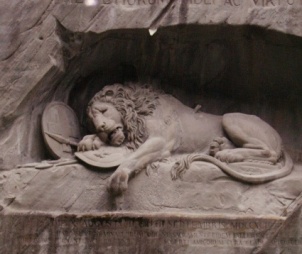
   Lion of Lucerne
 Le Pont d'Avignogne  
   
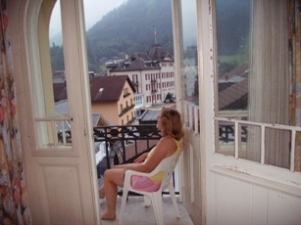
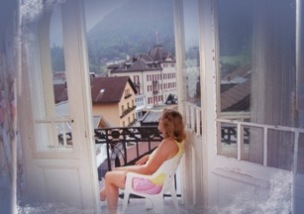
 Swiss morning  

What fun! Now I would tell you which application I used to  create each image, if I could remember, but I got so carried away with using  the tools that I lost track. I can tell you what photo editing applications I  have on my iPod though and they are these:

I tend to use the Free versions of these apps but if you  want to delve further into the detail there are more features available in the fuller  versions available for purchase. A great resource that covers these and others  with amazing examples and instructions is iPhone Obsessed : Photo Editing Experiments with Apps by DanMarcolina. Thanks Dan.