SiLLé Library Engagement

I want to tell you about this concept – the Self Initiated Life Long Learning Experience. This is a new acronym created by me a few months ago. It is a way that people use the library that is currently not described in any way. This to me is one of the backbone features of the library. It is something I have called SiLLé

Self – it is about the individual; not your parents or your school or your workplace.

It is initiated by the individual; not by a curriculum, or a government organisation, or a rigid course.

The double ‘l’’s stand for Life Long Learning; that is self-explanatory I think. It could have been three ‘I’’s but that would have been silly.
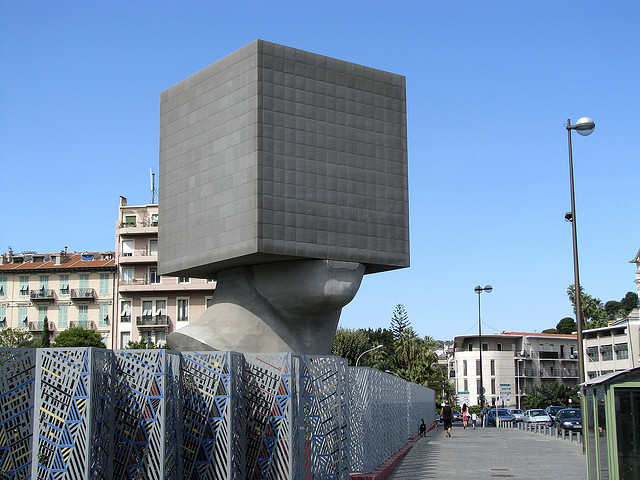
Public Library, Nice, France

Public Library, Nice, France

é – because it is an experience. ‘e’ also represents the electronic medium of the virtual and digital world that libraries are part of. The French accent I put in just to give the acronym some French flair, but also because the French appreciate the value of the silly idea. This public library in Nice France is proof of that.

Here is an example of the self initiated lifelong learning experience.

A few years back I read this library book. The Buddha, Geoff and Me by Edward Canfor-Dumas. I enjoyed it immensely. The book introduced some things that I had not heard about before:

  • SGI Buddhism
  • A chant that featured heavily in the story But I was curious to know how to pronounce the chant and what it sounded like.

So I listened to an audio copy of the book and enjoyed the story once again. I heard the pronunciation – “nam-myoho-renge-kyo” – but sadly no chant. So I hopped online to research these things. I found various versions of the chant on YouTube. And I found that the chant means “Devotion to the Mystic Law of the Lotus Sutra”. I also found out that SGI Buddhism stands for Soka Gakkai International and this is a Japanese branch of Buddhism.

You could do all of this without the help of the library, however this is where the library catalogue serves as a precision tool for the masterful library users. Using the library catalogue I can bring up the record of the book I enjoyed and then cross-reference by subject to find more books on the topic, or by that author to see what else this guy has written, or by the narrator because I enjoyed hearing the gorgeous English accent of Nicholas Bell.

So the self-initiated lifelong learning experience continues… It is a truly unique intellectual wandering specific to me, and my random interests; as it is for everyone. Through this process we learn new things, our knowledge increases, and some of these pursuits might lead to something like a job; but not necessarily. However the impact that is has on improved literacy is immense. And we know that improved literacy helps with freedom of expression, civil liberty and a democratic society.

Now let me tell you a story about this man Og Mandino. Augustine Mandino was born in 1923. After schooling he joined the U S Air Force where he became a military officer and a jet fighter pilot. He flew during World War II. After his military duties, Mandino became a door to door insurance salesman. But he was really bad at it. He became an alcoholic, failed his family, and became destitute. He wanted to commit suicide. He went to a gun shop to get a gun and end it all. But the gun shop was closed.

Next door there happened to be a library so he went in to wait until the gun shop opened. He browsed through the books in a library, and it was the books about self-help, success and motivation that captured Mandino’s attention. He began reading and found himself there at the end of the day, having forgotten all about the gun. He read hundreds of books that dealt with success, a pastime that helped him alleviate his alcoholism.

He found W. Clement Stone’s classic, Success Through a Positive Mental Attitude, and this book changed Mandino’s life. He wrote the bestselling book The Greatest Salesman in the World. His books have sold over 50 million copies and have been translated into over twenty-five different languages.

Mandino eventually became a successful writer and speaker. This was before the Internet and before TED talks. He died in 1996.

The library saved his life. Because…

  • It was there
  • It was open
  • It was free to enter
  • It was inclusive
  • Full of many books on a vast array of topics
  • He was not answerable to anyone
  • His personal SiLLé experience with the library saved his life.

National Library Week 2015

National Library Week has been a busy week for me where I have seen months of planning come to fruition. Our author event was a success with a lovely discussion around the topic of this year’s theme ‘imagine’.

Seven authors were asked questions posed by poet Andrea Louise Thomas. These authors were a diverse group and this added richness to the discussion. The authors were: Garry Disher; Greg Hill; Rose Inserra; Judy Taylor; Brita Lee; Leigh Van der Horst; and Susan Berg.

Andrea Louise Thomas expertly led the conversation asking questions tailored to suit each author’s unique approach. Andrea is a poet, arts editor of Mint magazine, proof reader, and poetry slam finalist. So a very well qualified person to lead this discussion.

IMG_4768

Susan Berg offered a heroic and painful true story about losing her whole family in a boating accident in which she was the only survivor. The tragedy many years past, her story is about how her life has unfolded since that awful day.

Leigh Van der Horst is a new author with a book about the grief following her mother’s death. A common theme by coincidence, but it was interesting to hear about different approaches to writing about this deeply life-changing experience. The resulting published manuscripts also show this different approach to a similar life experience.

Garry Disher is a credible writer of crime fiction and his substantial body of successful works shone through in his answers that provided insight, generosity, and the humble spirit of a true craftsman.

Judy Taylor is new to the writing scene and her self-published diary of grief after her mother’s death is raw and personal. She gave advice based on her experience of the self-publishing process.

Greg Hill is a ghostwriter who brings life to other people’s true stories. He spoke with knowledge and depth about the writing process.

IMG_4770

Brita Lee writes science fiction. The Panopticon Deception is the first published of a trilogy. Her passion and excitement for writing was obvious as she described how she lets the story reveal itself to her as she writes.

Rose Inserra writes children’s non-fiction and her latest non-fiction publication is about dreams. As a teacher of the writing craft she is well qualified to talk about the topic. She is warm, intelligent, and an engaging speaker.

The audience seemed happy and satisfied with one lady telling me, “I go to these types of events all the time, and this was the best one ever.” Sigh!

Books read in 2014

GoodReads is a fantastic online tool for keeping track of your reading and I have been using it for the last couple of years. By contrast LibraryThing is great for recommending books that suit your reading and uses crowd tagging extremely effectively.

I used the reading challenge within GoodReads setting my goal at 50 books for the year. I am not an especially fast reader and tend to abandon a book if it doesn’t grab me in the first chapter. With this challenge I was encouraged to read books to the end, and this worked well for the most part. I read 28 non-fiction books; 10 fiction books; and I did not finish (abandoned) 4. Only two received five-star ratings: one non-fiction and one fiction.

Also note the prevalence of self-help books. This is no surprise as it is a genre that I have always been fond of reading, ever since my father first introduced me to the book “The Power of Positive Thinking” by Norman Vincent Peale. The last two years have been a challenging time for me personally trying to come to terms with the deaths of my mother and father, and life without them.

This tendency to read self-help books has been validated by the efforts of the Reading Agency in the United Kingdom, where their “Books on Prescription” program and the “Mood Boosting Books” program show the power of reading to lift us up out of habitual and damaging thought patterns.

So here are my results in order of preference:

TITLE AUTHOR RATING
1 The Goldfinch Donna Tartt ✪✪✪✪✪
2 An Astronauts Guide to Life on Earth Chris Hadfield ✪✪✪✪✪
3 Magical Journey: An Apprenticeship in Contentment Katrina Kenison ✪✪✪✪
4 10 Day Detox Diet Success: How to succeed on the 10 Day Detox Diet Mark Hyman M.D. ✪✪✪✪
5 Into Thin Air: A Personal Account of the Mt. Everest Disaster Jon Krakauer ✪✪✪✪
6 Love With A Chance of Drowning Torre DeRoche ✪✪✪✪
7 The Big Fat Surprise: Why Butter, Meat and Cheese Belong in a Healthy Diet Nina Teicholz ✪✪✪✪
8 The Fast Diet Michael Mosley ✪✪✪
9 Paris Letters Janice Macleod ✪✪✪
10 Why Mindfulness is Better Than Chocolate: Your Guide to Inner Peace, Enhanced Focus and Deep Happiness David Michie ✪✪✪
11 The Tenth Door: An Adventure Through the Jungles of Enlightenment Michele Hebert ✪✪✪
12 Walk Like a Buddha: Even If Your Boss Sucks, Your Ex is Torturing You, and You’re Hungover Again Lodro Rinzler ✪✪✪
13 The Age of Miracles: Embracing the New Midlife Marianne Williamson ✪✪✪
14 Demons Wayne Macauley ✪✪✪
15 Bringing the Sacred to Life: the Daily Practice of Zen Ritual John Daido Loori ✪✪✪
16 The Beethoven Factor: the New Positive Psychology of Hardiness, Happiness, Healing and Hope Paul Pearsall ✪✪✪
17 The Power (The Secret #2) Rhonda Byrne ✪✪✪
18 Gone Girl Gillian Flynn ✪✪✪
19 Wishes Fulfilled: Mastering the Art of Manifesting Dr. Wayne Dyer ✪✪✪
20 The Best of Me Nicholas Sparks ✪✪✪
21 The Gospel of Joy Amanda Gore ✪✪✪
22 A New Earth: Awakening to Your Life’s Purpose Eckhart Tolle ✪✪✪
23 Radical Forgiveness Colin C. Tipping ✪✪✪
24 Using LinkedIn Patrice-Anne Rutledge ✪✪✪
25 The Inside-Out Revolution: the Only Thing You Need to Know to Change Your Life Forever Michael Neill ✪✪✪
26 E-Squared: Nine Do It Yourself Energy Experiments That Prove Your Thoughts Create Your Reality Pam Grout ✪✪✪
27 Still Alice Lisa Genova ✪✪
28 Fitlosophy 1: chasing Physical perfection in a World of Gluttony Sharny Kieser ✪✪
29 The Breakthrough Experience: A Revolutionary New Approach to Personal Transformation John F. Demartini ✪✪
30 What Westerners Have for Breakfast: Five Years in Goa John McBeath ✪✪
31 Dying to Know: Is There Life After Death Josh Langley ✪✪
32 The Husband’s Secret Liane Moriarty ✪✪
33 A Long Way Down Nick Hornby ✪✪
34 Why Is God Laughing? The Path to Joy and Spiritual Optimism Deepak Chopra ✪✪
35 My Son and the Afterlife: Conversations from the Other Side Elisa Medhus M.D. ✪✪
36 Driving Under the Influence Jenna Martin
37 Elizabeth is Missing Emma Healey
38 Sisters of Spicefield Fran Cusworth
39 Blink: the Power of Thinking Without Thinking Malcolm Gladwell abandoned
40 The Cuckoo’s Calling Robert Galbraith abandoned
41 The Word Exchange Alena Graedon abandoned
42 After Darkness Christine Piper abandoned

I plan to use GoodReads again to challenge myself once again in 2015 and I think that the target of 50 books remains a good one for me.

Paris Letters

Janice Macleod, the author of the book Paris Letters, inspired me to try my hand at a bit of drawing once again. She makes a living selling her letters online. These letters are hand written and illustrated with simple pen and water colour sketches. And of course this all began in Paris.

I love using Instagram to share beautiful photos of our world and so I thought I could begin by copying some of the photos I had already taken. I love this one of cherries in a glass bowl for it’s cheery Christmassy feel. Here is the original photo taken by me, and my sketch. And this I used for Christmas cards this year.

Christmas cherries 2014

Christmas cherries 2014

Library reading programs

I was lucky to attend the Reading Agency Seminar held at the new Library at the Dock in Melbourne.

Debbie Hicks, Director of the Reading Agency, opened the seminar with a presentation about the reading programmes offered in the UK. They offer UK public libraries tools for reading activities under a sustainable strategic framework that is benchmarked nationally for ensure continuity.

Their programmes include:

  • Summer Reading Challenge
  • Chatter Books
  • Reading Activists with volunteering opportunities for youths.
  • World Book Night
  • Reading Groups
  • Books on Prescription
  • Mood Boosting Books

Dr. Jacinta Halloran talked about the gap between the early stages of anxiety and depression and the need for prescribing drugs. She talked about the sinking feeling she gets when she prescribes drugs for depression, knowing that bibliotherapy could help at this early stage. Jacinta is the author of two novels: Dissection, andPilgrimage. Jacinta works with Susan McLaine and more information about their work can be found at the Bibliotherapy Australia website.

Lisa D’Onofrio showcased the ‘Go Goldfields project. Part of this included a Literacy Strategy “read all about it”, that involved collaboration across sectors using the National Numeracy and Literacy Framework in order to adopt a common language.

Bec Kavanagh spoke eloquently about the Stella Prize which seeks to highlight gender inequality in literature for children and teens.

Rosie Cirrito from Brimbank Libraries talked about their Reading Buddies program that matches volunteers with readers. A reward system uses stickers, etc , to acknowledge milestones.

Sarah Hopkins and Karyn Siegmann of Bayside Libraries talked about the reader experience in libraries. They aim to support a reading culture by maximising library spaces, displays, and collection usage trends (Collection HQ). “The book is the hero.”

Sue Wootton of Eastern Regional Libraries talked about their Read with the Reading Dog program that incorporates dogs for reading practice for children identified as needing extra help by local schools.

Robyn Childs from Moreland Libraries talked about their Read More program that encapsulates all of their reading activities: from author talks, displays, writing competitions, workshops, etc.

Shirley Bateman of Melbourne City Libraries facilitated some reflections on the presentations. These were:

  • Value of partnerships to be “courageously collaborative”.
  • National Literacy and Numeracy framework
  • The value of families in the reading journey
  • Diversity of content and the danger of the single story. This story was referenced and I recall loving it when I first watched it: 

Paula Kelly, Library Manager of Melbourne City Libraries reminded us about the SLV/PLVN Statewide project READ (yet to be completed).

Debbie Hicks of the Reading Agency said that “libraries are unifque community spaces for the delivery of interventions for wellbeing.” Books on Prescription offers a book list of self-help books that are professionally selected using a book selection protocol, and made available through public libraries in the UK. A user leaflet is also provided that offers further information.

Susan McLaine talked about the power of literature to move and heal, saying that “in the library is healing for the soul,” and that “there is often wisdom within the story. Our aim should be to enrich life quality, life spirit, and nourish connection.” Susan’s website is Words That Heal and she is currently working on her PhD at RMIT on the topic of “creative bibliotherapy” while continuing to facilitate session within a prison.

Dr. Louise Roufeil is a psychologist that provided an overview of mental health in Australia. 45% of Australians experience some form of mental illness in their lifetime. 20% had a diagnosed mental health disorder in the last 12 months. The high prevalence of anxiety impacts on productivity across the board. Early intervention is not readily available. Bibliotherapy can fill this gap and libraries are well positioned to do this.

Lisa Lang of Melbourne City Libraries read an excerpt from a Tobias Wolff novel that left us hanging… A great example of their Story Lounge programme that runs monthly at Library on the Dock.

We finished the day with a practical planning session that only served to reaffirm the need for collaboration amongst library services in order to provide similar programs. What do we do already? What more can we do?

Choose Your Own Library Adventure

In this exciting politically incorrect episode you get to Choose Your Own Library Adventure based on two possible scenarios:

Scenario 1 – The Community Lounge Room

The automatic doors open on time and in you hustle with the crowd of others from the community: seniors; pensioners of all ages; those needing care and their carers; the unemployed; homeless people; parents; children; babies; toddlers; teens; students; the aimless; business people; travellers; visitors; group members attending meetings; and the curious.

The people carry bags, phones, backpacks, coffee, water, food, shopping, books, DVD’s, CD’s, coats, laptops, hats, toys, and not a pen amongst them.

Many arrive on wheels: strollers; walkers; motorized scooters; shopping trolleys; wheel chairs; and skateboards.

This community library is inclusive, caters for all, is paid for by taxpayers, and welcomes everyone without obstacles, barriers, judgment or discretion.

Everyone makes themselves at home settling in for a few hours or the day. There is shelter, warmth, comfort, food, hot and cold drinks, and others to interact with. Everyone is free to eat, drink, talk, read, play games, surf the Internet, laugh, gamble online, shout, scream, run, dance, play music, run a business, study, research, argue, and put their feet up without concern or bother. Indeed they are entitled to do so.

This is The Community Third Place; the lounge room for the town; a makerspace; the library of the present, hopefully morphing into some similar version of the Library of the Future where community wellbeing predominates.

Personal hygiene in this community lounge room differs notably and is commented upon by customers and staff. What to do about this while remaining ‘pc’?

Random screams punctuate the day with too much frequency. These erupt from over excited children, and unfortunate adults forever anchored with the minds of toddlers.

Derelict and homeless people shuffle to their daily corner, rummage through their plastic bags for snacks, before sleeping the day away.

Damaged and disappointed people approach the library staff for assistance with a mixture of fear, bravado, entitlement, envy, and try to persuade or bully their opinions, complaints, and excuses, to further bend the flimsy policies to suit themselves. The “SHUSH” disappeared and the avalanche of guidelines for good behavior followed. Do what you want – make this space.

Custodial protection of our precious printed and digital words and knowledge is deemed to be of no real worth or value. Come take it – it is yours afterall.

Scenario 2 – The Quiet Study

This unassuming small shop/office has small quaint signs to let you know this is a “Library”. It is unapologetic in the retro feel that values books, ideas, and knowledge. It requires a membership application to join; beyond the usual personal ID with current address, a questionnaire is filled in, a deposit for the annual membership payment is made, and then the potential member must wait until the application is successful on approval by the management. A typical question might be: Name the title of your favourite book when you were a child. And: Name ten of the books you read in the past year, and please provide a short review of each. Etc.

Once approved, paid-up, signed the agreement to the terms and conditions, and have your library membership card, you are free to use the services. So you enter, sign in at the front desk, leave your bag, phone, and all belongings in a locker-room. There is water available in the foyer, but no drink or food is allowed in the Library. You are allowed to bring in a notepad (print or digital) and that is all.

The inner library has shelves full of books. There is no WiFi. There is not Internet access, other than pc’s with the digital resources provided by the library. There are no DVD’s, no music CD’s. There are pc’s for the library catalogue. There is a separate room for the printer, photocopier, fax machines available for the usual fees to library members. There are desks and seats scattered around for research, reading, writing, and study purposes.

There is no talking allowed. SHUSH reigns supreme. Talk and you are out. Repeat offenders have their memberships cancelled with no refund. Conversations with Master Librarians are done in whispers at the front desk.

The Library closes at lunch-time for everyone to go and have an unhurried meal. The Library reopens in the afternoon and then again in the evenings.

Although just offering books for browsing and borrowing, these include fiction, the classics, non-fiction, beautiful coffee-table books, books in a variety of languages as well as English, journals in print and digital format, and small collections for children and teens.

This is a place for quiet study and reflective practice. It is for personal enquiry and discovery. The resources are cared-for and protected. If you run, destroy property, speak loudly, act with entitlement, not pay your dues, or interfere with others, your membership will be cancelled for the year with no refund.

Choose Your Own Adventure Library

So do you want the maker-space, community lounge room complete with screaming people, for random, multi-purpose, entertaining, every person, public library/asylum?

Or are there some quiet unassuming people out there who want to return to the days of library shush, for a quiet space to study, learn, read great literature, and formulate new knowledge? And you would happily pay the annual membership?

Perhaps there is another alternative that I have not considered, apart from our excellent Academic libraries where students are the members.

What do you think?

Book Club Lists

One of the joys of my job is being able to choose books for the book clubs to read. The existing Book Club Collection I work with has currently almost 150 titles. And there are about twelve book clubs using this service.

My job in recent months has been to trim the existing list by analyzing whether titles were unpopular and not likely to be read, as well as what titles were already read by our clubs. I decided on ten titles that I offered to other library services and these were all gratefully accepted and moved on.

At the same time I began a new list of possible contenders for the 2015 list. This list grew to about 25 titles that we read and debated about, although we didn’t get time to read them all. One is not yet published. So there is an element of educated guesswork and relying on published reviews.

My colleagues and I agreed on ten titles and these we have ordered to add to our collection for 2015. We also add ten titles from the SLV Summer Read from last season. Add two titles that we picked up through the library swaps, and we have 22 new titles to add to our Book Club Collection. You can see the list here.

Now all I have to do is find time to continue to read the ones I haven’t yet read.

Ambrosia between paper leaves

What is that state of being between books? How do we describe it? What word properly fits the feeling?

You know the feeling of that lull between reading books? Especially when you read a satisfyingly great story such as The Goldfinch by Donna Tartt.

You close the last page, you feel satisfied by a great ending, you sit and pause with the book closed on your lap, and you drift, still absorbed in the atmosphere of the story. You wait, linger, dwell, reflect, and hesitate before reaching for the next book to read.

You know if you try to relive or reread the story it won’t have the same impact. The surprising twists in the plot won’t surprise you. You know the fate of the characters. You know what it is about now.

A great satisfying work of fiction is a rarity, so you are not keen to start a new book just yet. And you want to continue to luxuriate in this story while it continues to have a hold on you.

What is this feeling? Is there a word that best describes it? I wracked my brain, used a thesaurus, gathered together a word cloud of possibilities:

Screen Shot 2014-07-10 at 8.16.45 pm

Once the lovely hiatus is over and we have properly assimilated the themes and meaning within the story, we are enriched and can never return to our former selves known to us before we read this story. We are more. We mature a little more. Our knowledge and wisdom has grown.

“A mind that is stretched by a new experience can never go back to its old dimensions.” ~ Oliver Wendell Homes Junior

I wonder if anyone who chances to read this blog post can offer the perfect word that describes this delicious lull between reading books?

Books as life rafts

A library in the middle of a community is a cross between an emergency exit, a life raft and a festival. They are cathedrals of the mind; hospitals of the soul; theme parks of the imagination. ~ Caitlin Moran

Forlorn and adrift on the sea of life; I flounder.

No longer daughter, mother, sister, granddaughter, daughter-in-law; my ego plunges into the classic existential crisis – if not that, then who is this ‘I’? The identities that gave the ego a firm structure where it could reside with comfort and confidence, vanish into the whirlpool of the relentless hunger of “life’s longing for itself”.

Stripped bare, languishing with the flow, the ego in abeyance, waiting, watching, wondering.

I recall the story told by Og Mandino. Reading books in a public library saved him. Homeless, destitute, and about to end his miserable life, he walked into a public library to pass some time before the gun shop next door opened. He sat and started to read, then came back the next day, and the next, turning his life around to become an author, speaker and motivator.

Lovers of books and reading know the power of the written word and that’s what keeps our noses inside books. But why are the words of others more influential than the words we might string together ourselves? They aren’t! The thing is that when we find ourselves in a state of despair or confusion, often due to circumstances not of our making (such as the death of a loved one, or two), then we might be incapable of making our mind do anything beyond grieve.

This is when the words of others offer a lifeline. Throw us a book and we will use it as a life raft. It doesn’t matter what book. Some might say it needs to be a religious book and that would be fine. But really, it could be anything. Works of fiction are perfect because they allow our mind to escape. It gives us a holiday from our own dismal and repetitive interior and whisks us away to another land and time.

As a long time reader of self-help books I can attest to the fact that this genre does not help at these fragile times.

As I steer my life raft to safer waters, these are the books that buoyed me over these past few months: 

*   A New Earth by Eckhart Tolle

*   Radical Forgiveness by Colin Tipping

*   The Gospel of Joy by Amanda Gore

*   Into Thin Air by Jon Krakauer

*   Maya’s Notebook by Isabel Allende

 But really they could have been anything. I would have liked to have re-read Echoes of the Early Tides by Tony Moore but my copy is packed away in a box somewhere still. I am about to plunge into Under Magnolia by Frances Mayes.

Plans for 2014

If there is one thing I learned from 2013 it is that not all plans are successful. Life sometimes takes over and the best laid plans with the right intentions need to be put aside.

But inspired by the ladies from the Up for a Chat podcast, and because I do believe in the power of intention and visualisation, here are some of the things I want to accomplish and/or work towards this year: