Pretty pictures

Like so many of us, I love art. I love to look at artworks created by artistic souls. I appreciate the creative process and the results of that pursuit. My first academic study was Art & Design. I have drawn and painted my share of artworks, but don’t call myself an artist.

I am lucky that in today’s libraries art is considered an authentic way to showcase the creativity of those in our community. The last public library service I worked in had a successful and inclusive local community art program that invited and encouraged anyone to submit works into the program. The library became a gallery that showcased new works every three months. Beginning artists had a place to try out their talent and successful pieces were often sold to art appreciators.

I am lucky again in my position at the public library where I now work, as I currently look after the Art for Loan Program. This program differs in that artists can include their works in the program and people who join the program can loan artworks and take them home to enjoy for 2 months. Then change them over for other works. The library again becomes a gallery where artworks are showcased and we all get to enjoy the creative efforts; and pretty pictures.

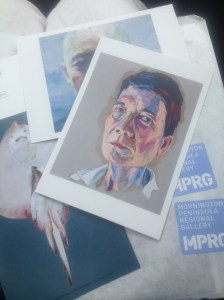
archibald_proze_showToday I visited the Mornington Peninsula Regional Gallery to see this year’s entrants for the Archibald Prize. It was busy with many other interested people keen to see these works. My favourite was the work by Anh Do of his father Tam Do. I didn’t realize Anh Do has this amazing artistic ability. I love the thick rough swathes of paint. The bold ‘unreal’ colours expertly and yet roughly placed to give form and light to the portrait. This photo of a postcard does not do it justice. The other portrait I loved was by Qiang Zhang of Yang Li. It shows a similar approach with bold thick imprecise brush strokes that give form to a large headshot.

My husband loved the portrait of Nick Cave, Citizen Kave by James Powditch. It intentionally looks like a movie poster and suggests a great movie with a cast to excite movie-lovers: Johnny Cash; Debbie Harry; Robert Mitchum; Tom Waits; and others.

Choose Your Own Library Adventure

In this exciting politically incorrect episode you get to Choose Your Own Library Adventure based on two possible scenarios:

Scenario 1 – The Community Lounge Room

The automatic doors open on time and in you hustle with the crowd of others from the community: seniors; pensioners of all ages; those needing care and their carers; the unemployed; homeless people; parents; children; babies; toddlers; teens; students; the aimless; business people; travellers; visitors; group members attending meetings; and the curious.

The people carry bags, phones, backpacks, coffee, water, food, shopping, books, DVD’s, CD’s, coats, laptops, hats, toys, and not a pen amongst them.

Many arrive on wheels: strollers; walkers; motorized scooters; shopping trolleys; wheel chairs; and skateboards.

This community library is inclusive, caters for all, is paid for by taxpayers, and welcomes everyone without obstacles, barriers, judgment or discretion.

Everyone makes themselves at home settling in for a few hours or the day. There is shelter, warmth, comfort, food, hot and cold drinks, and others to interact with. Everyone is free to eat, drink, talk, read, play games, surf the Internet, laugh, gamble online, shout, scream, run, dance, play music, run a business, study, research, argue, and put their feet up without concern or bother. Indeed they are entitled to do so.

This is The Community Third Place; the lounge room for the town; a makerspace; the library of the present, hopefully morphing into some similar version of the Library of the Future where community wellbeing predominates.

Personal hygiene in this community lounge room differs notably and is commented upon by customers and staff. What to do about this while remaining ‘pc’?

Random screams punctuate the day with too much frequency. These erupt from over excited children, and unfortunate adults forever anchored with the minds of toddlers.

Derelict and homeless people shuffle to their daily corner, rummage through their plastic bags for snacks, before sleeping the day away.

Damaged and disappointed people approach the library staff for assistance with a mixture of fear, bravado, entitlement, envy, and try to persuade or bully their opinions, complaints, and excuses, to further bend the flimsy policies to suit themselves. The “SHUSH” disappeared and the avalanche of guidelines for good behavior followed. Do what you want – make this space.

Custodial protection of our precious printed and digital words and knowledge is deemed to be of no real worth or value. Come take it – it is yours afterall.

Scenario 2 – The Quiet Study

This unassuming small shop/office has small quaint signs to let you know this is a “Library”. It is unapologetic in the retro feel that values books, ideas, and knowledge. It requires a membership application to join; beyond the usual personal ID with current address, a questionnaire is filled in, a deposit for the annual membership payment is made, and then the potential member must wait until the application is successful on approval by the management. A typical question might be: Name the title of your favourite book when you were a child. And: Name ten of the books you read in the past year, and please provide a short review of each. Etc.

Once approved, paid-up, signed the agreement to the terms and conditions, and have your library membership card, you are free to use the services. So you enter, sign in at the front desk, leave your bag, phone, and all belongings in a locker-room. There is water available in the foyer, but no drink or food is allowed in the Library. You are allowed to bring in a notepad (print or digital) and that is all.

The inner library has shelves full of books. There is no WiFi. There is not Internet access, other than pc’s with the digital resources provided by the library. There are no DVD’s, no music CD’s. There are pc’s for the library catalogue. There is a separate room for the printer, photocopier, fax machines available for the usual fees to library members. There are desks and seats scattered around for research, reading, writing, and study purposes.

There is no talking allowed. SHUSH reigns supreme. Talk and you are out. Repeat offenders have their memberships cancelled with no refund. Conversations with Master Librarians are done in whispers at the front desk.

The Library closes at lunch-time for everyone to go and have an unhurried meal. The Library reopens in the afternoon and then again in the evenings.

Although just offering books for browsing and borrowing, these include fiction, the classics, non-fiction, beautiful coffee-table books, books in a variety of languages as well as English, journals in print and digital format, and small collections for children and teens.

This is a place for quiet study and reflective practice. It is for personal enquiry and discovery. The resources are cared-for and protected. If you run, destroy property, speak loudly, act with entitlement, not pay your dues, or interfere with others, your membership will be cancelled for the year with no refund.

Choose Your Own Adventure Library

So do you want the maker-space, community lounge room complete with screaming people, for random, multi-purpose, entertaining, every person, public library/asylum?

Or are there some quiet unassuming people out there who want to return to the days of library shush, for a quiet space to study, learn, read great literature, and formulate new knowledge? And you would happily pay the annual membership?

Perhaps there is another alternative that I have not considered, apart from our excellent Academic libraries where students are the members.

What do you think?

Back to busyness

I have been back working in public libraries for a few weeks now and it’s great to feel useful and able to help people with their questions. In general the level of sophistication in regard to technology related questions is notable. Many in our population have become quite adept at using and navigating the Internet and all of the associated technologies. The days where it was assumed that the older generation did not ‘get’ this stuff are behind us. Many people are curious about things like ebooks and will ask about them, even if they decide not to give them a try – just yet.

The busy libraries where I work require an agile mind that can handle a day of mental gymnastics, able to negotiate the barrage of unique questions in quick succession.

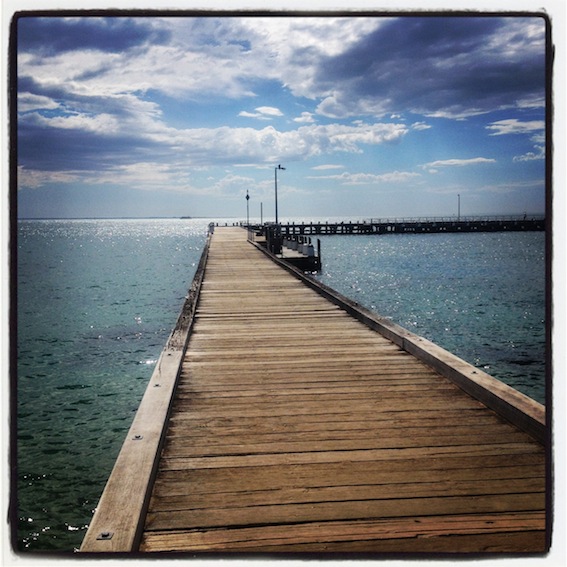
portsea_pier_01042014This week I was lucky to work some shifts on the mobile library truck. I took this photo near one of our stops, during a short break.

I have been reacquainting myself with the different Library Management System, as well as the different procedures and work-flows associated with a large and multi-branch public library service. I feel very much welcomed back and I am appreciative of that.

42 Aussie Librarian Bloggers in 2013

In 2011, I began an investigation into Australian Librarian bloggers: how many could I locate online; who were they; what sector did they work in; the topics they posted about; and the overall look and feel of their blog. I was interested in individuals and did not want to investigate the blogs of library organisations. So I narrowed the field to the personal blogs of Australian Librarians. While I did include librarians from tertiary academia, I narrowed the field by not including the blogs by teacher librarians situated in primary or secondary school libraries. I also added 14 Librarian bloggers from overseas just to provide a measure of comparison.

After a quick and dirty Google search I located Libraries Interact where there is a list of Australian Librarian bloggers. Of these, in 2011, many were already inactive after running out of steam following the 23 Things training. There were other lists and indexes I stumbled across and I soon listed 66 active Australian librarian bloggers. Although my list did include many of the active bloggers from the Libraries Interact list, it also included others not on that list. I looked for the names of the bloggers and their twitter links. I tried to ascertain the library sector that they worked in. I read about their favourite topics and attempted to evaluate the content by gauging them against a content rubric that I created for the task.

Some bloggers like to write book reviews; some like to talk about their experiences answering customer’s questions; others like to pass on information about technology; some vent; some show their creative talents in the kitchen or with crafts; holidays are popular topics; most were personal; and many were superficial. My five-smile rating 🙂 🙂 🙂 🙂 🙂  was a rare gem indeed on my incomplete list.

I was searching for relevant, interesting, deep, and meaningful content. I wanted to hear opinion. And while there is much great content from our bloggers, one stood out – It’s Not About The Books by Hugh Rundle. Good on you Hugh! Hugh continues to boldly post thought-provoking and challenging articles that are written with excellence. He embeds relevant links thoughtfully. He sets the bar high and is a fine example for anyone wanting to lift their own efforts to a new level; myself included.

So I have once again reviewed the list on Libraries Interact. Of the 58 bloggers listed under personal blogs of Aussie Librarians only 27 are still active (46.5%). Of the 66 Aussie Librarians on my list that were active in 2011, 46 bloggers have posted content in the last year; and only 36 in the last 4 months. (69% still active). Of the 14 blogs from overseas all are still active.

Here is my list of Aussie Librarians who are active bloggers:

1 A Chivas Regal Moment @CatyJ
2 Alyson in Library Land @alysondalby
3 A work in progress @fionareadersrr
4 Ballarat Library Chick @gemmas1980
5 Better than cheesecake @susannenewton
6 Biblio Turismo @Biblioturismo
7 Blog Fest at Tiffany’s @LibrarianCat
8 Book boy @bookboy
9 Bronwyn’s Library Blog @pivotalbooks
10 Connecting Librarian @michelleamclean
11 Digital Collaboration @SusanMyburgh
12 explodedlibrary.info @explodedlibrary
13 Feral Library Tales @kalgrl
14 From Melbin @malbooth
15 Girl in Landscape @wateryone
16 Hecuba’s Story @polyxena
17 HeyJudeOnline @heyjudeonline
18 Hmmm @Kridwyn
19 Inn0vate @petahopkins
20 It’s not about the books @HughRundle
21 JayGee Library Log @jaygee35
22 Jenelle Net @jenelle
23 Langridgep @langridgep
24 Librarian Hoi @librarianhoi
25 Librarians Matter @libsmatter
26 Library Dreamings @VesnaC
27 Macaronic @jobeaz
28 Opinions from an OPL @newgradlib
29 Pixelated Mushroom @pixelmushroom
30 Ramblibrarian @boycetrus
31 Ramblings from yet another Librarian @katejf
32 Read Watch Play Participate @ellenforsyth
33 reeling and writhing @mulberry_road
34 Ruminations @flexnib
35 Shallowreader’s Blog @VaVeros
36 Shelterit @shelterit
37 snail @snailx
38 Stained Glass Waterfall @warrencheetham
39 Sues Bent @suesbent
40 The Land of the Surprising Pun @librarianidol
41 There she goes @stephmcg
42 Thoughts and Reflections @shewgirl

And the list of Library bloggers from overseas:

1 Annoyed Librarian @LibraryJournal
2 Circulating Ideas @circideas
3 David Lee King @davidleeking
4 Free Range Librarian @kgs
5 Librarian by Day @bobbinewman
6 Librarian in Black @TheLib
7 Librarian Net @jessamyn
8 Phil Bradley @Philbradley
9 Self-plagarism is style @daveyp
10 Stephen’s Lighthouse @sabram
11 Swiss Army Librarian @SwissArmyLib
12 Tame the Web @mstephens7
13 The Shifted Librarian @shifted
14 Virtual Dave @rdlankes

P.S. This list is not complete in an online world that is constantly changing, but if you are an Australian Librarian who writes a blog and your blog is not listed here and you would like it to be, then please leave a comment below.

Zombies and the future of libraries

What do zombies have to do with the future of libraries you may well ask? In ‘reality’ if there was a zombie apocalypse, libraries would perish along with all of humanity. And being zombies, one would hardly expect them to have an active interest in the future of libraries or indeed any intellectual pursuit.

Like many librarians I have been thinking about the future of libraries a lot lately. It is a hot topic in the library world, mainly due to evolving technology, the proliferation of internet-connected personal devices, and the cheap and easy access to eBooks. The spread of the World Wide Web did not result in the end of libraries, but it has reduced our physical non-fiction collections substantially. Now with the second wave of internet-enabled technologies, does anyone need to go to a library at all to get hold of the reading material they want and need? Perhaps that end is in sight and this has resulted in a lot of talk amongst library professionals. So what are we here for?

The Victorian Public Libraries 2030 Strategic Framework was published in 2013 after 18 months of intensive collaborative discussions by public library staff in Victoria, of which I was privileged to be a part. Future scenarios were discussed in detail, how these scenarios might unfold, and what might be the key drivers to certain future scenarios. The drivers were identified as: technology, environmental issues, commuting, economic problems, health, increasing ageing population, cooperative endeavours, education and lifelong learning. The final stages of these discussions allowed us to add public libraries into the scene, thereby discussing how best to address and take full advantage of some new unfolding situations. Two future scenarios emerged: the creative scenario; and the community scenario. Both of these scenarios described the future public library as a community space.

Library as ‘community space’ has already had a whole lot of verbiage. Isn’t that what public libraries have always been? Perhaps I am not old enough to remember the places of shush, where reading books was done alone and in silence. There is value in the concepts of place-making, maker-spaces, and community collaboration. This has been, and continues to be, my experience of the library. The only quiet library space I can recall is the reading room of the State Library of Victoria; otherwise libraries are full of conversation, activity, people traffic, meetings, entertainment, coffee, and laughter. Oh, and books!

Personally, I am typically bookish, introverted, nerdy, and self-motivated. I like to explore notions on my own. This is the main reason why I love libraries. I enjoy following a pathway through literature that is entirely determined by me and as a result of my reading. I have described this as ‘delving into the book’; it is an entirely unique journey that begins and ends with the book, with regular forays online when new information is needed. I concur with the words that Nancy Pearl wants as her epitaph, “I’d rather be reading.”

The IFLA/UNESCO Public Library Manifesto 1994 does not mention the book at all, despite being written pre-internet. The manifesto defines public libraries as “the local gateway to knowledge”, and is essential for “fostering peace and spiritual welfare through the minds of men and women.” Key mission number two, “supporting both individual and self conducted education”, validates my own habits. Public libraries are seen as fundamental to democracy, prosperity and knowledge, so how can anyone consider a future without libraries?

At the recent ALIA Future of the Profession Summit Mark Pesce urged those librarians present to share their knowledge in order to plan a future for libraries. He reminded them that “the culture of sharing has its origins in the library.” And while “the light of knowledge shines more brightly than ever before, from two billion smartphone screens”, this is an opportunity because it is librarians who are the experts “in an environment of informational hyperadundance.” While the librarians in Victoria did just that last year, the resulting framework is one interpretation of possible future scenarios. The trick is in being able to recognise the triggers and apply the strategies at the right time.

Neil Gaiman is an enthusiastic supporter of libraries and he explained recently that “everything changes when we read”, that “libraries are the gates to the future”, and by closing libraries “you are silencing the voices of the past and you are damaging the future.” A dire warning indeed!

So back to the zombies… Dr. Matthew Finch is responsible for The Zombies of Tullamore:

In an interview with Corin Haines he talks about his approach to attracting people into the library. By choosing a theme that excites the imagination of a particular audience, he uses the activity to enhance the literacy experience within the library. I’m sure lots of librarians and teachers do this already, but this is a good example of how to do it well and to instill the learning opportunity into the activity. It is more than just a trendy promotional hook; it is immersive learning through role play and self discovery.

He identifies “why Zombies are good for libraries:

  1. Zombies attract kids and teens of all backgrounds.
  2. Zombies remind us that libraries are about more than shelves.
  3. Zombies promote choice and independent learning.
  4. Zombies may decay, but immersive literacy lives on.”

A lot more about the future of library profession can be found here.

This is what I know:

  • People will keep creating new content: fiction and non-fiction.
  • People will want to read that content for a multitude of reasons.
  • People will always expect and deserve to get unrestricted access to reading materials.
  • Technology will continue to evolve and change the way we live.
  • Library funding will continue to be threatened.
  • Librarians will continue to want to organise content.
  • Libraries will continue to be adapted and adjusted to accommodate the new.
  • Fun makes learning easier.
  • Zombies are fiction.

P.S. R. David Lankes talks about the future of libraries in this presentation From Loaning to Learning

A home for geeks

INF443 Creating and Preserving Digital Content is the final subject for my study for the Master of Information Studies that I am doing online through Charles Sturt University.

The first module of readings made me realise that while I thought I had a good grasp of this topic, in reality, there is much to know and learn. And in a field such as this where the technology changes are inherent and a determining factor, it is a swift intellectual pursuit.

After week one I was so interested and engrossed in the readings that I realised what a true geek I am, and I had found “my people”. As if it isn’t enough to be bookish and proud, now to admit out loud that I am also a lover of technology – bookish + techno = Geek. BUT it is SO interesting.

And it is more than just about the containers: the books and the files. It is really about the content and what the possible loss of that content means to us all. Did you know that the original NASA film images of man walking on the moon are gone? Conspiracy theorists calm down. But what a catastrophe. How could that happen?

So I feel like someone coming out saying: “Hi. My name is Susan Bentley. And I am a geek.” Probably no surprise to the people who know me.

12 library podcasts

While I drive to and from work each day I listen to podcasts rather than listen to the radio. I have a few favourites that I download regularly and have mentioned previously on this blog.

driving_to_work

But I was curious to know how many podcasts there are about libraries or by librarians. These are the results of that inquiry; although not the definitive list. My focus is on content about libraries and not particularly books, authors or events. I also focused more on public and academic libraries and disregarded school libraries. These were all still active at the date of this blog post. My rating system judged the podcast on: relevance; content; sound quality; host performance; currency; and enjoyment factor. The results reflect an entirely personal opinion.

  1. Circulating Ideas by Steve Thomas (USA) ☺☺☺☺☺
  2. EdReach-LiTTech Show by EdReachUs (USA) ☺☺☺
  3. Free Library of Philadelphia by Free Library of Philadelphia (USA) ☺☺☺☺☺
  4. Infopeople by infotweets (USA) ☺☺
  5. Jisc Podcast by Jisc (UK) ☺☺☺
  6. Librarian on the edge by Terry Ballard (USA) ☺
  7. Library Chat by Corin Haines (NZ) ☺☺☺☺☺
  8. Nerdy Librarians by Michael and Mindy Perry (USA) ☺
  9. T is for training by baldgeekinmd (USA) ☺☺
  10. The Library Channel by ASU Libraries (USA) ☺☺☺☺
  11. TWIL (This Week in Libraries) by Eric and Jaap (Netherlands) ☺☺☺☺☺☺
  12. Whatever Mathers by Amy Mather (USA) ☺☺☺☺

You can find these podcasts and many more via the iTunes store.

I am currently reading Wool by Hugh Howey. I have just finished watching Series 2 of Game of Thrones on DVD. I am listening to The Wellness Guys podcast.

My 2012

Inspired by Chris Guillebeau of The Art of Non-Conformity I offer you a review of my 2012.

It was a fruitful year at work. After three years in a leadership role I feel the library team are functioning happily and effectively. This is positive and noticed and commented upon by our customers.

On a National level the National Year of Reading and love2read campaign provided a brand and focus to work around. Our locally organised and funded events were successful and included: an entertaining talk by David Astle of SBS’s program Letters and Numbers; a Dr Suess Olympic Reading Relay Challenge; a visit and talk by author Kathryn Fox; a short story competition with the NYR theme for November “What makes you cry?”; book reviews; and competitions. It must be said that for our small rural region the NYR offered nothing except a logo. We provided everything all the planning, funding, organisation, seeking and paying for authors, staffing. We should have used our own logo!

NYR12

On a State level Tomorrow’s Library and the Victorians Love Libraries campaign prompted passionate discussion. The Stage 1 Report has leapt to a ‘solution’ that needs quite a lot of detail IMHO. Hopefully Stage 2 will fill in the gaps, especially for small libraries on the remote fringes of the state.

The VALA Conference held in Melbourne in February was a professional highlight and I was particularly interested in the presentations by Jason Griffey, Eli Neiburger, Eric Miller, and Tim Sherratt.

The Local Government Rural Management Challenge was held in Renmark and I was part of the team. This experience was intense, challenging and worthwhile.

As a technology lover I enjoyed using my new devices to access information for work and play. I am adept at sourcing and reading eBooks, e-journals, and multimedia. I listen to a variety of podcasts from around the world on my iPod as I drive to and from work. I watch TV programs, podcasts and other videos on my iPad. I sync my devices to my work email and calendar to stay on track. Facebook is a horrid and deceitful form of communication that has lost its value since being infiltrated by advertisements, organisations, and payment for sharing. Twitter I ignore now that it has become too big and unwieldy. Free Apps are king. I read blogs via the Google Reader app and this is a very convenient way to spend down time. Pinterest and Goodreads are top of the tree in terms of social media I think.

I began a Master of Information Studies via distance education at Charles Sturt University. With just four subjects to complete, the first two subjects are Strategic Planning and Project Management. The reading of academic papers on these topics has been interesting and rewarding and I hope will assist me as I lead the library into the strategic planning process in 2013.

On a more personal level I have been meditating and practicing yoga and hope to increase my involvement in these.  Leadership for the disillusioned by Amanda Sinclair provided a useful model of mindful leadership that supports my own attitudes. I read her book then was lucky to attend a seminar at the SLV.

My eldest son was married earlier this year and my youngest son gets married early in 2013. My daughter was married some years ago now – can’t think how many! My mother continues to respond to all the cancer treatment they throw at her and my father does everything in his power to support her. My husband continues to cycle with the local cycling club, as well as working with the local Council.

How does your library grow?

In keeping with the National Year of Reading, I continue to write about the monthly themes, and for September it is “grow”. My focus is on public libraries.

Many people assume that public libraries keep all of their books, and when not being borrowed, they sit on the shelf or are kept in storage somewhere. However this is a myth. In reality public libraries have very limited space and books don’t often remain in any one spot for very long at all. It is a dynamic process of purchasing, processing, sorting, shifting, distributing, displaying, shelving, re-shelving, retrieving, loaning, issuing, returning, re-shelving, repairing, evaluating, sorting, boxing, and at the end of its use – selling in a book sale or sent on to some other need. There is often not a mysterious “stack” of old books preserved for prosperity, unless the library is the National or State Library.

Public libraries attempt to manage this dynamic process with a Collection Management Plan that addresses the demographic of their users to try to predict demand. This plan offers guidelines to manage donations, weeding, purchasing, and when used in conjunction with a clever Marketing Plan, should maximise the collections full extent.

Often people generously offer their pre-loved books thinking the public library will cherish them as much as they have, whilst in reality they are often boxes of dog-eared, smoke-saturated, food-stained paperbacks that only add workload and obstacles to an already jam-packed library work space and work load. The local public library does not have the capacity to “grow” to this extent. There are exceptions of course, and sometimes the books donated are real treasures.

Direct request from customers for popular books and other resources proves to be a useful way to grow the collection while responding to local demand. But it can’t be the only driver because often there are fantastic things that exist that people aren’t aware of, or know that they want – yet. This is where the librarians craft comes into play and they can shape the collection with their expertise, worldly knowledge and creativity.

The Long Tail is a concept coined by Chris Anderson in 2005 and when applied to the library collection is easy to understand. If a library were to buy copies of the latest popular release in quantities to supply the demand and responded each time to every best seller, the shelves would soon be lined with multiple copies of last year’s bestsellers and little else, and look like a short stumpy tail. It would be like a drinks refrigerator filled with one brand of beer, or just beer. Which might be fine for beer drinkers, but not so for those who prefer champagne or tea or green smoothies. The Long Tail theory shows that by offering an array of many different titles on a diversity of subjects that often the quirky niche subjects get a space on the shelf that will be justified when it is inevitably matched with the diverse and quirky interest of a customer. And to paraphrase Tim Flannery, “The continued existence of the species depends on diversity.” When you apply this to humans then our existence depends on a diversity of attitudes, interests and knowledge that can only be gained by offering a wide range of topics for investigation. A browse along the shelves of the non-fiction section  will show books about beekeeping, how to work a room, bushcraft, Hagar, heavy metal music, the cats pyjamas, work abroad, survival, ideas, Shakespeare (of course), Henry Lawson, travel, art, architecture, computer help, languages, pregnancy, health issues, etc, etc.

The serendipity of browsing library shelves is a well-known and enjoyable pastime and many have commented on this human behaviour. Bryan Loar of Brave New World says that by using the online catalogue and reserving items ahead of time then “self-directed discovery has been lost”. Professor Todd P. Olson of Berkeley in California values the experience of browsing the library’s shelves so much that he has launched a fundraising campaign towards the “continuation of library collections to ensure that the joy of discovery will continue for generations into the future”. Steve Penn talks about how “you walk around the shelves and suddenly find something that you weren’t looking for but seems just right for you.”  Maria Popova of Brain Pickings worries “that we are leaving little room for abstract knowledge and for the kind of curiosity that invites just enough serendipity to allow for the discovery of ideas we didn’t know we were interested in until we are, ideas that we may later transform into new combinations with applications both practical and metaphysical.” And I could go on…

So eBooks and other electronic resources seem to offer a solution to the problem of relieving limited physical spaces in libraries, but restrict the valuable and enjoyable experience of browsing for the serendipitous find. Again I try to imagine the library space where much is only available as an electronic file or online. An electronic collection can grow beyond imagination, storing and preserving every book forever! Of course the preservation of electronic files is another complex issue altogether. But as Seth Godin tells us “Librarians who are arguing and lobbying for clever ebook lending solutions are completely missing the point. They are defending library as warehouse as opposed to fighting for the future, which is librarian as producer, concierge, connector, teacher and impresario.”

Well Seth Godin doesn’t have to convince me that libraries are not just warehouses for books, but if our buildings are not growing with new physical materials, and our collections are “hidden” in the “connected” cyber-world, then who and what is in the building? And how can the average Joe Blow discover, develop and grow with that serendipitous ah-ha moment of stumbling across that book that will change his life? I think it was Og Mandino who told the story about how he was destitute, homeless and was on his way to buy a gun to kill himself when he stumbled into a public library and this “saved” him and turned his life around. That weird unkempt, smelly, apparently homeless person who visits your public library every day might just stumble across his/her saving grace.

In the past I have thought that perhaps the library could display images or video on large screens of these hidden resources. Libraries do this now and have been for some time. And although it might create visual interest, it is just another screen in a world where screens proliferate. And the images would be limited and could not portray the full extent of the collection. And these have tended to be rather static displays even with the inclusion of video segments. Library catalogues could be (and perhaps are being) developed whereby the screen is used to display current catalogue items in a way that is more dynamic and interactive, uses multi-media, and has the ability to display at random or by selection, when not in use by a customer.  Perhaps the items displayed could be recommendations that respond to the person who passes by based on their past loans. I am sure the current technologies in Library Management Systems and RFID could already do this, however then we get into the murky waters of intrusion and privacy.

eM-powering eFutures

VALA 2012  was held at Jeff’s Shed in Melbourne. (officially – The Melbourne Convention and Exhibition Centre).  The promising title was eM-powering eFutures.

Jason Griffey kicked off the proceedings telling us about Libraries in the Post PC Era. He talked about how our customers are accessing our resources, the fast adoption of mobile technologies, and the need for better metrics in measuring this change in access. He went on to show us some examples of new technologies: flip scanning devices that will scan a book at a speed of 500 frames per second; the Samsung transparent window pc; Maker-bot 3D printing machine; and others.

Eric Miller of Zepheira talked about Linked data – weaving the web of libraries, museums and archives. This was my favourite presentation of the Conference.

Eibhlin Roche who is an archivist from The Guinness Storehouse in Ireland talked to us about her job and the Guinness Archive: unlocking the potential of an iconic global brand.  She stunned us with her statistics concerning dollars generated for Guinness directly from the Guinness archives.

Many other people presented talks and information in a variety of ways on topics ranging from gaming in libraries, to big data, staff training, library makeovers, and more. The papers and presentations can be found here. Further comments and notes can be found on Twitter by searching with the tag #VALA2012.

The main streams of content from the presentations were: planning for the future; up-skilling library staff to be able to assist with new technologies; library space redesign; data management; social media applications; and finding relevancy in the community in an era when library resources and competencies are available from other sources.