The Treasure Box

The pink and silver striped tin held lollies: chocolate cubed violet crumbles, or perhaps colourfully striped liquorice all-sorts. But that was not the reason I was drawn to my grandmother’s cabinet. There were interesting treasures behind the locked glass doors; bright objects that caught the eye of a small girl.

I remember the Toby mugs of varying sizes, stern faces, coloured coats, white stockings, buckled black shoes, and handles on their backs. Also elegant porcelain ladies with full skirts feathered with lace folds. A Japanese fan that revealed a pretty painted scene when unlatched. The family of small black elephants with white tusks always proved to be safe play things for children. Tea sets; elegant glasses; crystal bowls; decorated plates; and small decorated boxes that could hold hidden treasure, but when opened revealed – nothing.
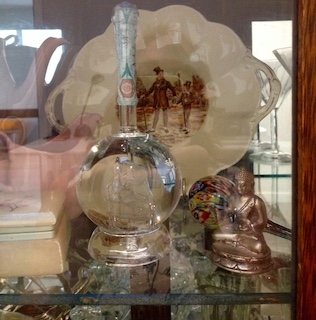
cabinet_1

The thing that always attracted me the most was a beautiful silver coloured tea set. It was modern in design in comparison to the other objects held in the cabinet. But I didn’t know anything about that then. My grandmother told me that I could have it when I grew up. This embarrassed me, as my appreciation of her things was just that, and so while I continued to admire her treasures, I stopped declaring this.

My mother inherited this cabinet minus many of the treasures within. My grandmother did indeed give me the silver tea set for a significant birthday. And over the years I have collected my own treasures. These things have been in boxes for the last 2 ½ years and it is only now that I am able to unpack them and put them into my grandmother’s cabinet that I inherited from my mother.
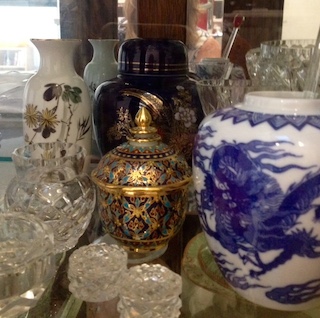
cabinet_3

My mother collected small elephant figurines. I don’t know why. Perhaps this love grew after the time she spent in Thailand. She had many of different styles, colours, materials, and sizes. At her wake my father said to offer them around to the people there. So I placed them all onto a tray and went around offering them like a plate of sandwiches. And almost everyone would say, “No I can’t take that one. That is the nicest one and everyone will want it.” People were drawn to the different elephants and almost all of them found new homes and a memento of my mother.

It is interesting to me the value that we place on objects. Why do we do that? Sentimental reasons and nostalgia count for a lot. What might have value in the market place might not be valued by me at all. I became an Industrial Designer because I appreciate well-designed good quality objects. Once I saw the ugly cheap plastic reality of mass production I bailed from this career path, not wanting to add to the already drowning plastic fantastic universe. “Form follows function” is the dictum of Industrial Design. And yet how many ways can we construct a chair? Or a tea pot? What do we actually need in our lives?

I cherish the memory of admiring the objects in my grandmother’s cabinet. It was a pure delight not yet tarnished with notions of monetary value, possession, greed, or competition. It was a small girl’s wonder that is precious in itself.
Sprucing Up the Library with Kevin Hennah

Kevin Hennah is like a comedy act for Librarians. He is funny, sarcastic, and knows how to provoke his audience. He regularly sprouts comments like:

If I have to hear the word ‘makerspace’ one more time…

And:

The Internet has moved the goal posts, yet many libraries keep kicking in the same direction.

And:

If you have RFID, why do you still have this Titanic circulation desk?

I enjoyed his workshop that reiterated concepts that I had heard before:

  • Ditch Dewey in preference for genre collections.
  • Create boutique style collections.
  • Use face-out displays of books.
  • Adopt clear signage.
  • Use ‘library’ as the strong brand that it is. Don’t adopt new names such as ‘Learning Centre’ or ‘Community Hub’ or ‘LINC’.
  • Weed, weed and weed.
  • Make space for seating for customers.
  • Ditch the pin-board displays in favour of screens, QR codes, and quick pick displays.
  • Blame Kevin.


It’s not about me

When I sat in the ECU holding the hand of my dying mother, it wasn’t about me. It was about being there for her, to be a loving daughter, to be a physical presence for another soul, my mother, as she passed reluctantly from this Earth.

When I helped my father when he visited my mother in her final days, I was there for him, to support him in his grief, to provide his transport, to cook his meals, to talk with the doctors, as he struggled, losing his lifetime companion. It was not about me.

When my husband and I resigned from good jobs, sold our home and most of our personal possessions, in order to be there to care for my father as he declined into ill health, it wasn’t about me. It was to be there for him at 1am and 3am and 5am 24/7, responding to his needs, helping him stagger to the toilet, giving him medicine to ease his pain. As I tried to allow him the space and dignity he deserved as his body failed him, lifting him when he fell, keeping him clean and comfortable, it was all about him, never about me.

When I had to oversee the Will as Executor, to deal with their much-loved possessions; never mine to give or take; I did so with respect and as instructed. I repeatedly asked for help and was consistently ignored by some. It was never about me.

When I grieved for my parents, a hole in my life, it was about me. And while others grieved too, I could barely contain my own grief. But still I wrote the thank you notes and made the phone calls, not for me, but for my parents.

As I sat in my parent’s home waiting for the slow legal wheels to turn, waiting for the right to sell, and my husband cleaned their house after their cancers had taken the limelight causing five years of neglect, it was never about me, or him, but in restoring order and treating their Estate with respect.

When I try to give gifts to my adult children, to extend a kindness, to celebrate their birthdays, milestones, and Christmas, it is about every mother’s joy in being able to give something to the ones they love. Maybe that is about me. But when that joy is denied that is not about me.

IMG_2202When I go to work, to earn money to live, I feel privileged to be able to share a love of books and reading. It is not about me. It is about extending that known joy to others lives.
I only have two eyes, one mind, one heart, and that is me. It’s all I have to experience this world. My conscience is clear, as I know my motives are genuine. I am not selfish, but my loss is all about me. It is impossible to carry someone else’s grief. I can see it, sit with it, give empathy, be kind, if given the opportunity.

What else could I have done, I wonder? There were always others involved in these experiences, and I respect and honour their involvement and personal perspective. It was never all about me. But I can’t speak for them.

This blog, my blog, is all about me. And I have struggled to find my voice again, silenced and humbled by common personal life events. I stagger on; a zombie, like the walking dead.

SiLLé Library Engagement

I want to tell you about this concept – the Self Initiated Life Long Learning Experience. This is a new acronym created by me a few months ago. It is a way that people use the library that is currently not described in any way. This to me is one of the backbone features of the library. It is something I have called SiLLé

Self – it is about the individual; not your parents or your school or your workplace.

It is initiated by the individual; not by a curriculum, or a government organisation, or a rigid course.

The double ‘l’’s stand for Life Long Learning; that is self-explanatory I think. It could have been three ‘I’’s but that would have been silly.

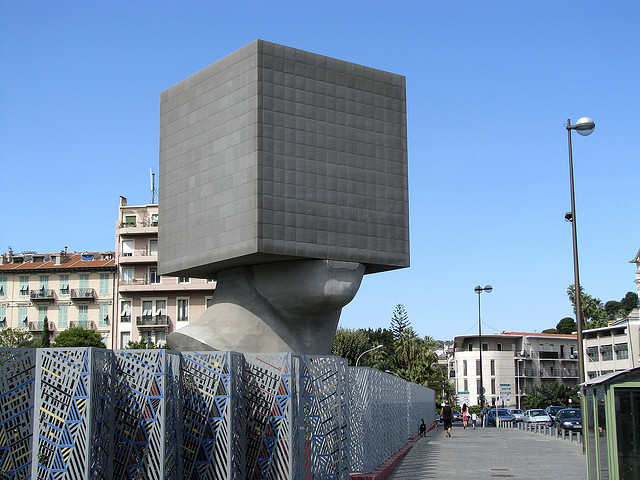
Public Library, Nice, France

Public Library, Nice, France

é – because it is an experience. ‘e’ also represents the electronic medium of the virtual and digital world that libraries are part of. The French accent I put in just to give the acronym some French flair, but also because the French appreciate the value of the silly idea. This public library in Nice France is proof of that.

Here is an example of the self initiated lifelong learning experience.

A few years back I read this library book. The Buddha, Geoff and Me by Edward Canfor-Dumas. I enjoyed it immensely. The book introduced some things that I had not heard about before:

  • SGI Buddhism
  • A chant that featured heavily in the story But I was curious to know how to pronounce the chant and what it sounded like.

So I listened to an audio copy of the book and enjoyed the story once again. I heard the pronunciation – “nam-myoho-renge-kyo” – but sadly no chant. So I hopped online to research these things. I found various versions of the chant on YouTube. And I found that the chant means “Devotion to the Mystic Law of the Lotus Sutra”. I also found out that SGI Buddhism stands for Soka Gakkai International and this is a Japanese branch of Buddhism.

You could do all of this without the help of the library, however this is where the library catalogue serves as a precision tool for the masterful library users. Using the library catalogue I can bring up the record of the book I enjoyed and then cross-reference by subject to find more books on the topic, or by that author to see what else this guy has written, or by the narrator because I enjoyed hearing the gorgeous English accent of Nicholas Bell.

So the self-initiated lifelong learning experience continues… It is a truly unique intellectual wandering specific to me, and my random interests; as it is for everyone. Through this process we learn new things, our knowledge increases, and some of these pursuits might lead to something like a job; but not necessarily. However the impact that is has on improved literacy is immense. And we know that improved literacy helps with freedom of expression, civil liberty and a democratic society.

Now let me tell you a story about this man Og Mandino. Augustine Mandino was born in 1923. After schooling he joined the U S Air Force where he became a military officer and a jet fighter pilot. He flew during World War II. After his military duties, Mandino became a door to door insurance salesman. But he was really bad at it. He became an alcoholic, failed his family, and became destitute. He wanted to commit suicide. He went to a gun shop to get a gun and end it all. But the gun shop was closed.

Next door there happened to be a library so he went in to wait until the gun shop opened. He browsed through the books in a library, and it was the books about self-help, success and motivation that captured Mandino’s attention. He began reading and found himself there at the end of the day, having forgotten all about the gun. He read hundreds of books that dealt with success, a pastime that helped him alleviate his alcoholism.

He found W. Clement Stone’s classic, Success Through a Positive Mental Attitude, and this book changed Mandino’s life. He wrote the bestselling book The Greatest Salesman in the World. His books have sold over 50 million copies and have been translated into over twenty-five different languages.

Mandino eventually became a successful writer and speaker. This was before the Internet and before TED talks. He died in 1996.

The library saved his life. Because…

  • It was there
  • It was open
  • It was free to enter
  • It was inclusive
  • Full of many books on a vast array of topics
  • He was not answerable to anyone
  • His personal SiLLé experience with the library saved his life.

Wanderlust

“Beauty surrounds us, but usually we need to be walking in a garden to know it.” ~ Rumi

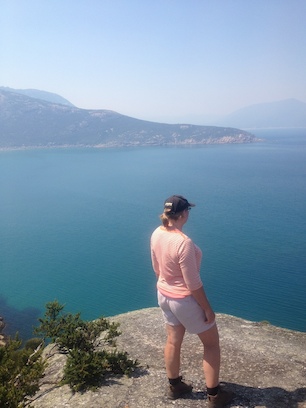
I’ve always loved walking. As a child my first impulse whenever we went somewhere new was to explore the surroundings. At High School I signed up for the ‘Bushwalking’ activity and was disheartened to find it was filled with students who wanted to escape from school, smoke and do other non-walking activities. As an adult, my husband and I would drag our three children on hikes through National Parks, around sea cliff tracks, overnight hikes carrying packs, and anywhere where there was a hill, a track, rocks, and gorgeous natural vistas.

IMG_4045_2

When my mother died and I knew I was returning to live on the Mornington Peninsula I planned to walk the trails of the Two Bays Walking Track in order to deal with my grief and loss. I knew the beauty of nature would heal me. The peace and solitude, alone with my thoughts amidst the hush of the bush and the music of the birds, gave me space to think and feel. As my father became ill and declined, these daily walks gave me strength to keep up the care for him until he too passed away.

The Two Bays Track is gorgeous. Full of twisted tree trunks, sun shining off sea glass, clouds spinning, the wind shaking it all alive, while birds flit and sing. The running group that we are member of choose a section of the track each weekend to run. I am content to walk and take photos. It fulfils my constant desire to continue to walk the trails and enjoy the natural beauty I see, and it sustains my soul.

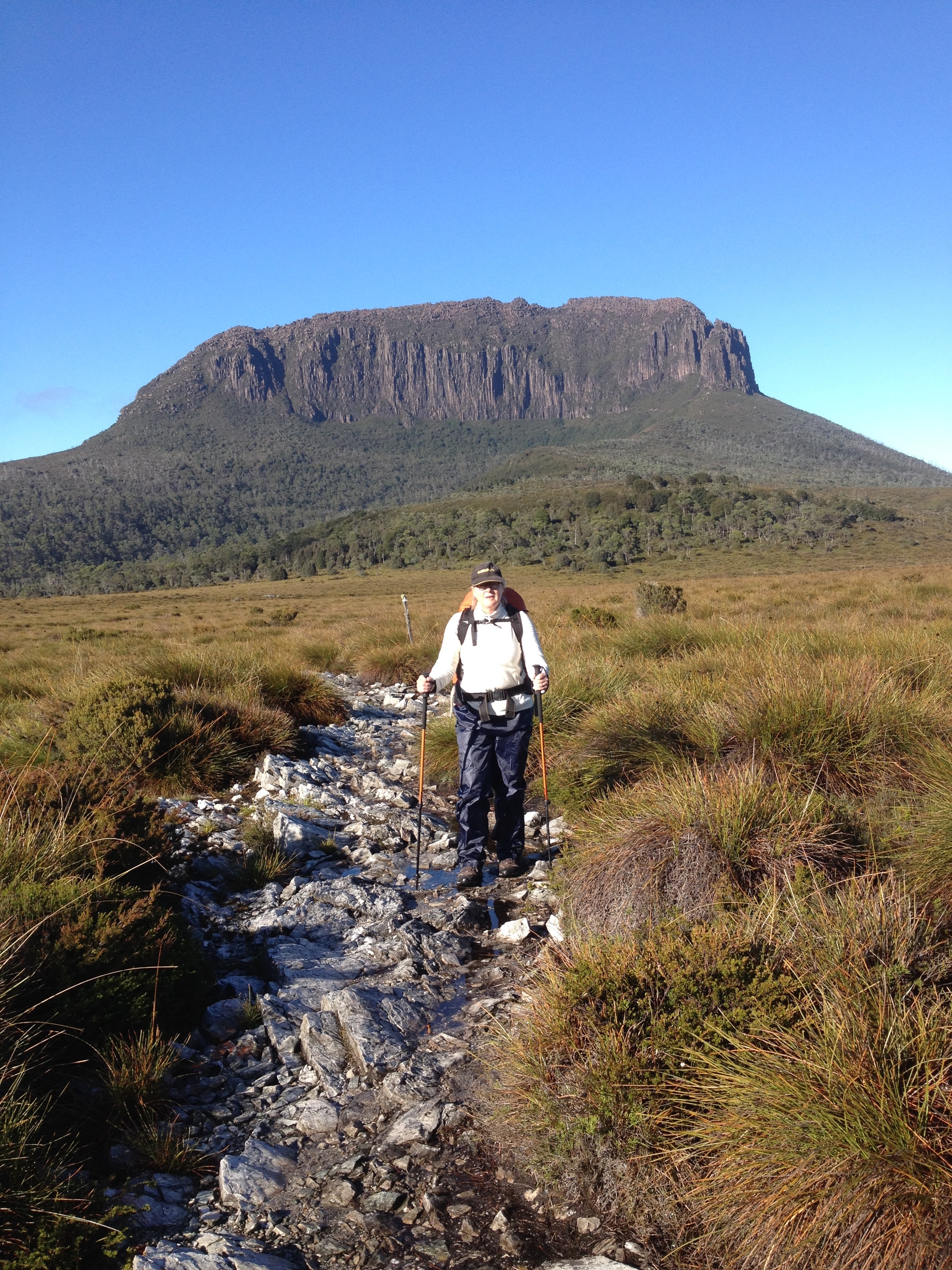
In March this year my husband and I went on a trek for 7 days along the Overland Track in Tasmania. It had been on my list of walks to do for many years. We had done both ends of the track in earlier years. Despite the injury I caused to my knee during this walk, I loved the experience. Being out in nature was glorious, away from roads, cars, electricity, screens, signs, commercial crap, and the entire mindless busy everyday world we live in. I loved the clean beauty of the vistas of mountains, rocks, cliffs, trees, forests, moss, cold, fragrance, quiet, snow, sun, wind, colour and textures. The wild raw untouched beauty cannot be matched by man.

Recently I went along to see the movie Six Ways to Santiago with a friend at a local cinema. I have read about the Camino Trail and although I find it intriguing I don’t really have a desire to walk it; perhaps because it is not entirely ‘in nature’ but winds through villages. I do not feel the need to go on a pilgrimage, and the numbers of people doing the walk puts me off a bit. One may ask why people are drawn to do such things, and the people in this documentary suggested that it is for: appreciation; movement; meditation; accessing creativity; friendship; talking; and thinking. And for some there is the religious appeal as it is historically a Christian Pilgrimage.

Mark Sisson lists the 17 health benefits of walking and suggests “it keeps your buttocks engaged with the world.”

So while I thought about walking and why people do it and how it has a positive effect on the mind, I wondered what to title this post. While waiting for an interstate flight, browsing the bookshop I found and bought the book Wanderlust : Find Your True North by Jeff Krasno. Its irresistible blurb reads,IMG_6084

“ Wanderlust: an irrepressible desire to travel the world, practice yoga, eat locally, live sustainably, consume ethically, be creative, and build community around mindful living.”

Yes, my quest continues and is in alignment with so many others.

Surrender

Floating in a circular pool of warm water I gaze up beyond the dark umbrella of Tea Tree branches to the soft green leaves swaying with the breeze above. The blue sky streaked with wisps of morning sea mist rising with the day

The mineral water cradles my limp body as I surrender to the moment. All thoughts are gone; all plans, worries, identity, tasks, dissipate with each warm bubble that tickles my back as it rises to the surface.

Screen Shot 2015-07-09 at 4.16.46 pmLater after a hot rock massage, my headache intensified and my brain foggy; I realize I had let go of my self and let my body and mind surrender to the elements. This I achieved without effort and without meditation.

Last weekend I went along to see and hear Marianne Williamson talk about her message of Love. Her ideas, based upon the book A Course In Miracles (ACIM), stretch the mind beyond the everyday.

One lady in the audience bravely confessed, “I don’t know why I am here today. I don’t understand anything you are saying.” Relentless in her message and passion, Marianne replied, “Well you are here so that says something. But you have a choice now; you can leave, or you can stay, let the words flow over you, and see what comes of that.” She went on to tell us all that these ideas are not beginner level entry into the spiritual ideas, and her message presumes an understanding of the spiritual life.

Screen Shot 2015-07-09 at 4.16.57 pmI have read her book “A Return To Love” that was first published in 1992. This book is her response and explanation of ACIM. Her book provides an accessible explanation of the heftier manuscript.

In the past, I had tried to follow the 365 lessons of the ACIM workbook and after just seven days I felt my mind shift towards uncomfortable craziness. I found it hard to continue. How does one stay grounded and functioning in this world I wonder? And yet I continue to strive and search for that deeper meaning and understanding. I have always been on this path.

Marianne Williamson spoke relentlessly and passionately all day. I felt energized when I left; but I did not feel any closer to grasping these ideas. But as I floated mindlessly in the warm pool of water yesterday, I realize it is possible to surrender to a larger story.

Changing landscapes in the library world

As part of the Public Libraries of Victoria Network Libmark group I was privileged to be the photographer at the seminar held in Melbourne – Changing Landscapes.

It was a great line-up of guest speakers hosted by the expertise and good humour of Brett de Hoedt of Hootville Communications.

Brett de Hoedt

Brett de Hoedt

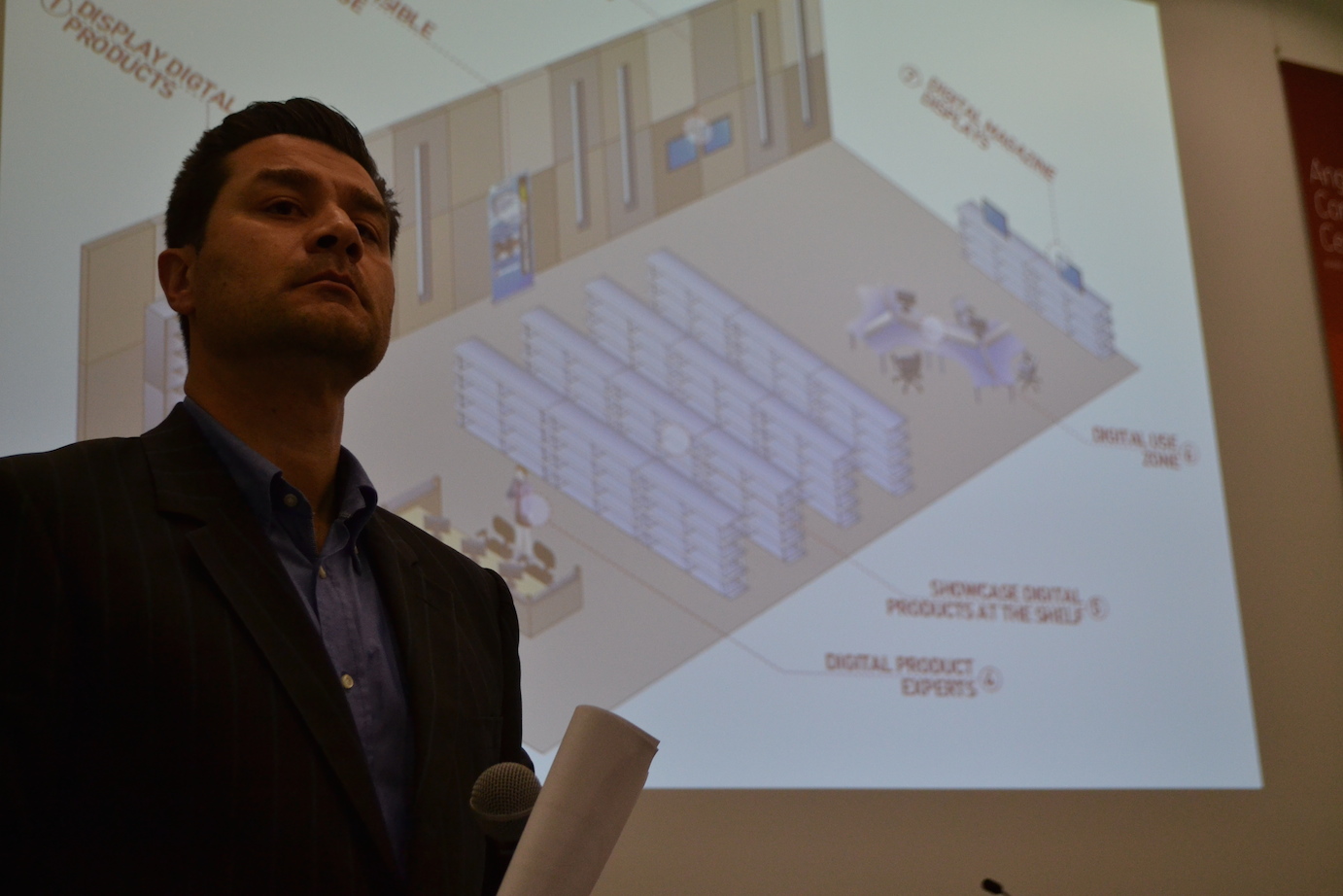
Richard Sarr of Wavesound started the day with a presentation about how to showcase digital resources within the physical space of a library. He really didn’t say anything that most librarians hadn’t already thought of already in this digital world.

Two CEO’s of two of Victoria’s Public Libraries, Karyn Siegman and Chris Kelly, presented an overview of the Libraries 2030 planning and subsequent documentation that will hopefully lead libraries forward into the future.

Sarah Kelly and Indra Kurzeme of the State Library of Victoria talked about their approach to social media and library programs. The richness and variety of their collections allow them to present a multitude of interesting and unique stories.

Matt Jones of Federation Square spoke fast and furiously about their approach to events planning. This presentation stood out to me as the most interesting of the day. Matt had a lot to say and it was all relevant, rich in detail and ideas. His explanation of the structural engineering of the site in Melbourne was slightly worrying.

Julie Rae from the Australian Drug Foundation told us how they reinvented the small old dreary library full of books to a sparkly new digital office space, thereby increasing their collection, access and loans by some ridiculous figure.

To finish the day Suzie and Celia, two library professionals presented their findings about ‘pop-up’ libraries providing case studies of both successful and unsuccessful experiences.

You can find the PLVN Libmark group on Facebook and Twitter.

National Library Week 2015

National Library Week has been a busy week for me where I have seen months of planning come to fruition. Our author event was a success with a lovely discussion around the topic of this year’s theme ‘imagine’.

Seven authors were asked questions posed by poet Andrea Louise Thomas. These authors were a diverse group and this added richness to the discussion. The authors were: Garry Disher; Greg Hill; Rose Inserra; Judy Taylor; Brita Lee; Leigh Van der Horst; and Susan Berg.

Andrea Louise Thomas expertly led the conversation asking questions tailored to suit each author’s unique approach. Andrea is a poet, arts editor of Mint magazine, proof reader, and poetry slam finalist. So a very well qualified person to lead this discussion.

IMG_4768

Susan Berg offered a heroic and painful true story about losing her whole family in a boating accident in which she was the only survivor. The tragedy many years past, her story is about how her life has unfolded since that awful day.

Leigh Van der Horst is a new author with a book about the grief following her mother’s death. A common theme by coincidence, but it was interesting to hear about different approaches to writing about this deeply life-changing experience. The resulting published manuscripts also show this different approach to a similar life experience.

Garry Disher is a credible writer of crime fiction and his substantial body of successful works shone through in his answers that provided insight, generosity, and the humble spirit of a true craftsman.

Judy Taylor is new to the writing scene and her self-published diary of grief after her mother’s death is raw and personal. She gave advice based on her experience of the self-publishing process.

Greg Hill is a ghostwriter who brings life to other people’s true stories. He spoke with knowledge and depth about the writing process.

IMG_4770

Brita Lee writes science fiction. The Panopticon Deception is the first published of a trilogy. Her passion and excitement for writing was obvious as she described how she lets the story reveal itself to her as she writes.

Rose Inserra writes children’s non-fiction and her latest non-fiction publication is about dreams. As a teacher of the writing craft she is well qualified to talk about the topic. She is warm, intelligent, and an engaging speaker.

The audience seemed happy and satisfied with one lady telling me, “I go to these types of events all the time, and this was the best one ever.” Sigh!

Women leading change

The Wake Up Project provided an event at the Melbourne Convention Centre: Women Leading Change that I was fortunate to attend with a friend.

We joined 500 women who listened to some remarkable and inspiring women talk about change. Seane Corn; Janine Shepherd; Tara Moss; Lucy Perry; Clare Bowditch; and Tami Simon were each introduced by Jo Wagstaff.

Seane Corn is a yoga teacher and activist who created the movement, Off the Mat and Into the World. She began the day talking about “Beauty, Bravery, & Living Your Truth”. She shared her personal story explaining how that has led her to where she is today. Advising us all to accept our “shadow” as well as our “light”, she explained that only then could we be truly authentic with others and ourselves.

Our wounds become our wisdom.” ~ Seane Corn

Janine Shepherd followed to talk about “The Power of Acceptance”. She is living proof of this as someone who was hit by a truck while cycling in the Blue Mountains, almost dying, being told she would never walk again or have children; and yet there she stood and walked unaided, vibrant, mother of three adult children, and a commercial pilot. You can hear her story in her TED Talk.

“Life is not about having it all. Life is about loving it all.” ~ Janine Shepherd

The gorgeous Tara Moss followed to talk “On Courage, Self-Care, and Why Women’s Voices Matter”. She says that first you must prioritise your own health before you are in a position to help others. She provided some interesting statistics to illustrate how women’s voices are not represented in government, business and organisations. Important decision making about women’s issues such as abortion, domestic violence, child care, etc are being discussed and decided by male voices, as they make up the significant majority of representatives present at the discussion tables.

Lucy Perry talked amusingly about “Fearless Living: How Fun, Forgiveness, and Fearlessness Can Change the World.” She says that ordinary women can do extraordinary things and she is proof of this through her work alongside Australian obstetrician Dr Catherine Hamlin as the former CEO of Hamlin Fistula Ethiopia in Australia.

Clare Bowditch entertained us after lunch with “Oh F**k, I Don’t Know What To Call This Talk”. She had 500 women singing in two-part harmony. And she talked about how we are not perfect, all of us are works-in-progress, and how we must “learn to sit in the uncomfortable now.” She says her most commonly asked question is “Why did Patrick have to die?

Tami Simon is the founder of Sounds True and she talked next about “Being True: Showing Up Fully in Your Work, Life and Love.” Her main principles are: individuality, being true, and heeding the call.

Her findings from her interviews “Insights At The Edge” are these:

  • The spiritual journey is a journey of subtraction. What can I let go of?
  • The disciplines of spiritual life are about the shedding process not self-improvement.
  • There is no end to the spiritual journey.
  • Every teacher is partial.
  • There is no escaping loss and sorrow.
  • Everything depends on how much you trust.
  • The most important thing is to know what the most important thing is to you. “Can I give myself to the love and connectedness of my life?

Seane Corn closed the day challenging us to find our voice and speak out. “Start Where You Are: It’s Time to Rise”. She says to celebrate an authentic human experience, be able to say ‘sorry’, self-care, own your ‘shadow’, and don’t be an arsehole.

Thank you to The Wake Up Project for organising this day. And thank you to Alana for inviting me to spend this special day with you, and being inspired by these amazing women.

Walking the Overland Track in Tasmania

If you were looking for a description of the Overland Track walking experience in Tasmania you could easily find many written and photographic books on the subject. And while in this account, I will not attempt to write a blow-by-blow (step by step) description, it must be emphasized that any second-hand account will fail to provide you with the actual experience. You must immerse all of your physical body and senses into the scene in order to appreciate it fully.

Overland Track signpost March 2015

Overland Track signpost March 2015

From a distance the landscape can appear grey, dull, olive green, and even boring. Up close the colour and diversity of plants, flowers, rocks, mosses, bark, fungi, water, etc., arrest the eye continually. Just when you relax thinking you have seen all there is to see, suddenly a new intricate variety appears and stops you in your tracks. I was amazed to see a toadstool I’d never seen before – pale red and green with a frilly white skirt. I only saw one.

The sights are awesome. Towering mountain crags where eagles dive for fun. Tolkeinesque mossy green forest paths that wind around the roots of 800 year old trees. Vast alpine plateaus where yellow button grass hide tiger snakes and shy furry animals. Waterfalls in full flight. Lakes too cold to dip a toe. Rocks, trees and flowers arranged by The Master Landscape Gardener, and then dusted with fresh falling snowflakes.

The fragrances were intense. The nutmeg aroma of wet wild Sassafras. The gin and tonic spritz of the celery top bush. Eucalypts, Myrtles, Banksia, King Billy Pine, Beech and more.

The tiresome experience of pushing your body along paths full of rocks, mud, water, tree roots, steps, streams, and leeches, in driving rain was a challenge experienced by all in the group.

The Overland Track Tasmania March 2015

The Overland Track Tasmania March 2015

We signed up for the ‘chardonnay version’ with Cradle Mountain Huts. We had a bed in a warm hut at the end of every day. Our packs did not need to carry food, or bedding or tents or cooking gear. Our guides led us, cajoled us, cooked for us, and cleaned the huts after we left. Our guides were awesome and extraordinary individuals proud and passionate about this unique environment and Tasmania in general. The huts were warm, had hot showers, drying rooms for our wet muddy boots and clothes. We had three course dinners with local wines. It felt like the privilege that it was.

I wrote a haiku for each day in my mind. I took photographs galore. We were touched by a tragic incident halfway along the trail reminding us of the need to be careful in this remote wilderness. Out of network range the guides used the satellite phones to call in the Air Ambulance helicopters.

jetty_lake_st_clair_march-2015

Jetty at Lake St. Clair Tasmania March 2015

We pushed on. My knees struggled to complete the journey and did so with tape strapping and walking poles. At last we arrived at our destination all too soon – Lake St. Clair on Day Six. Lunch on the jetty waiting for the boat to pick us up, we basked in the warm sun, appreciating the journey.

I recommend this experience BUT be prepared for a difficult walk where EVERY footfall must be decided before it is actually taken.